ANDALUSIA FROM EAST TO WEST: NICO AUBERT’S CROSSING.
A 1,083-kilometre journey in complete autonomy, through wild nature, tough decisions and the reliability of his Moster185 Plus MY25.
The world of paramotoring is an incredibly diverse universe. Some pilots experience it as a moment of freedom at the end of the day or during the weekend, a way to find peace through slow take-offs, familiar landscapes and gentle landings.
Then there are pilots looking for something different. Those who chase the unknown, who aim for altitudes or distances that seem unreachable. Extreme challenges, world records, solo crossings and expeditions that push both body and mind to their limits, rewarding those who complete them with a sense of achievement that few other experiences can offer.
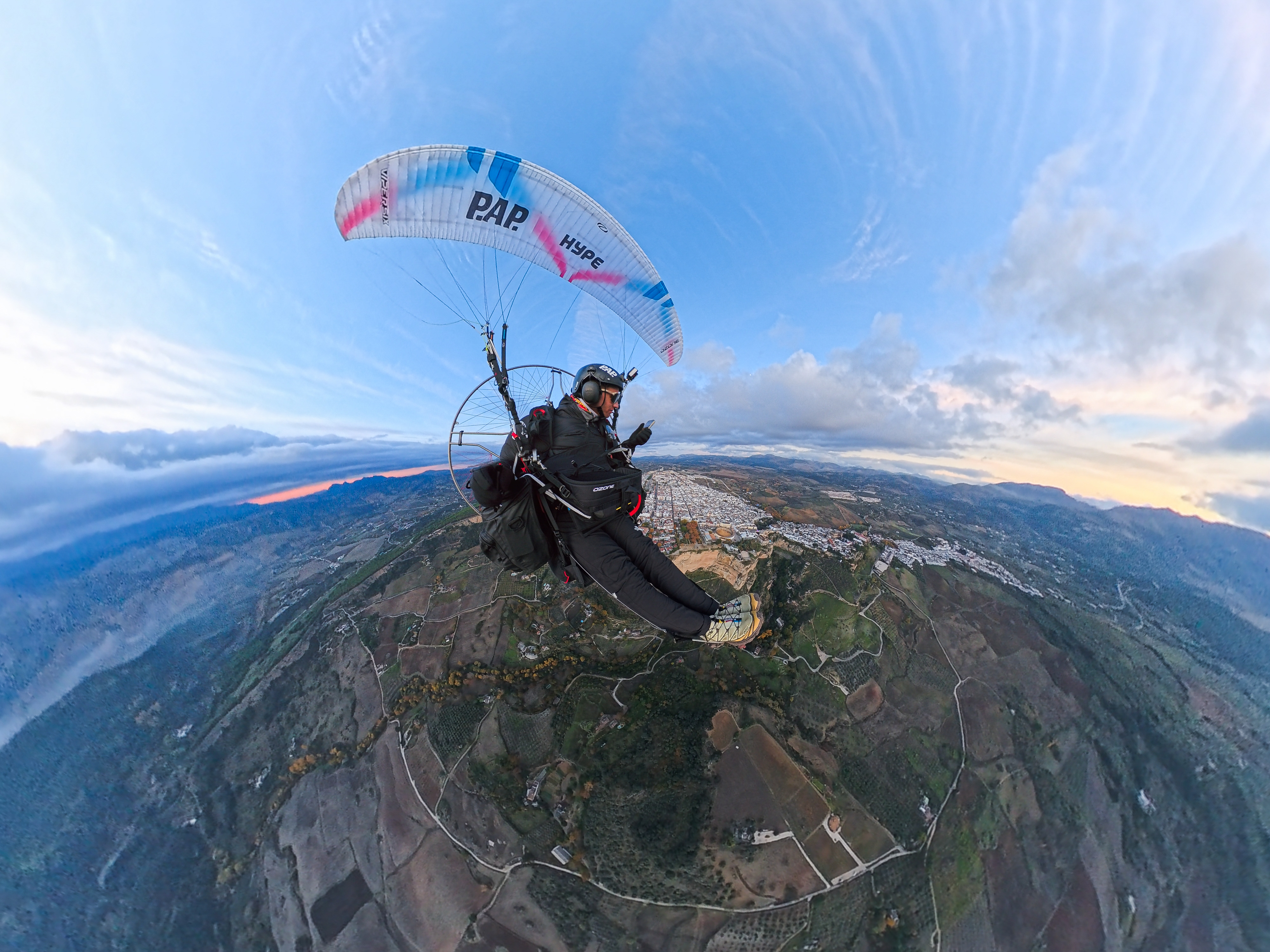
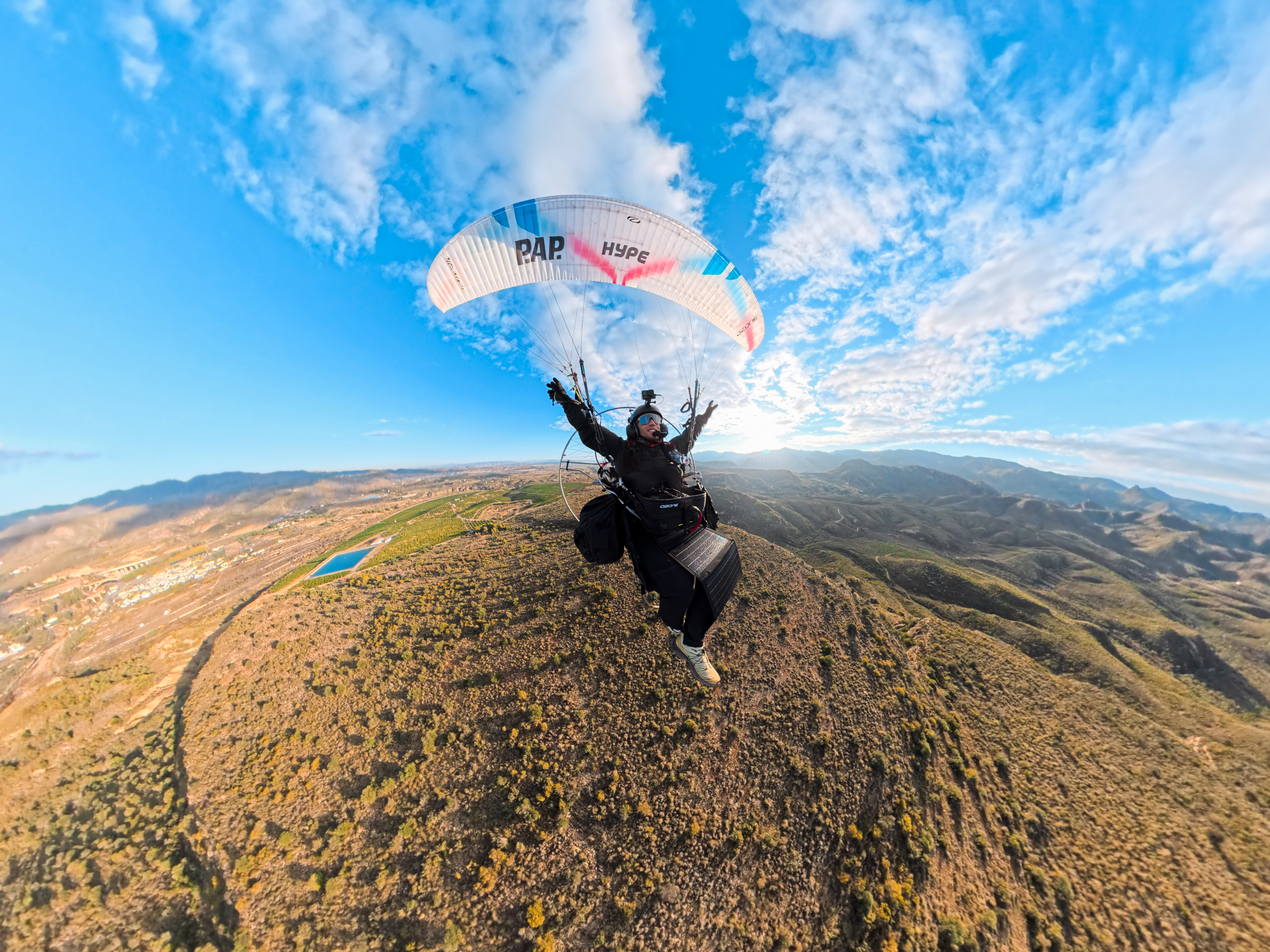
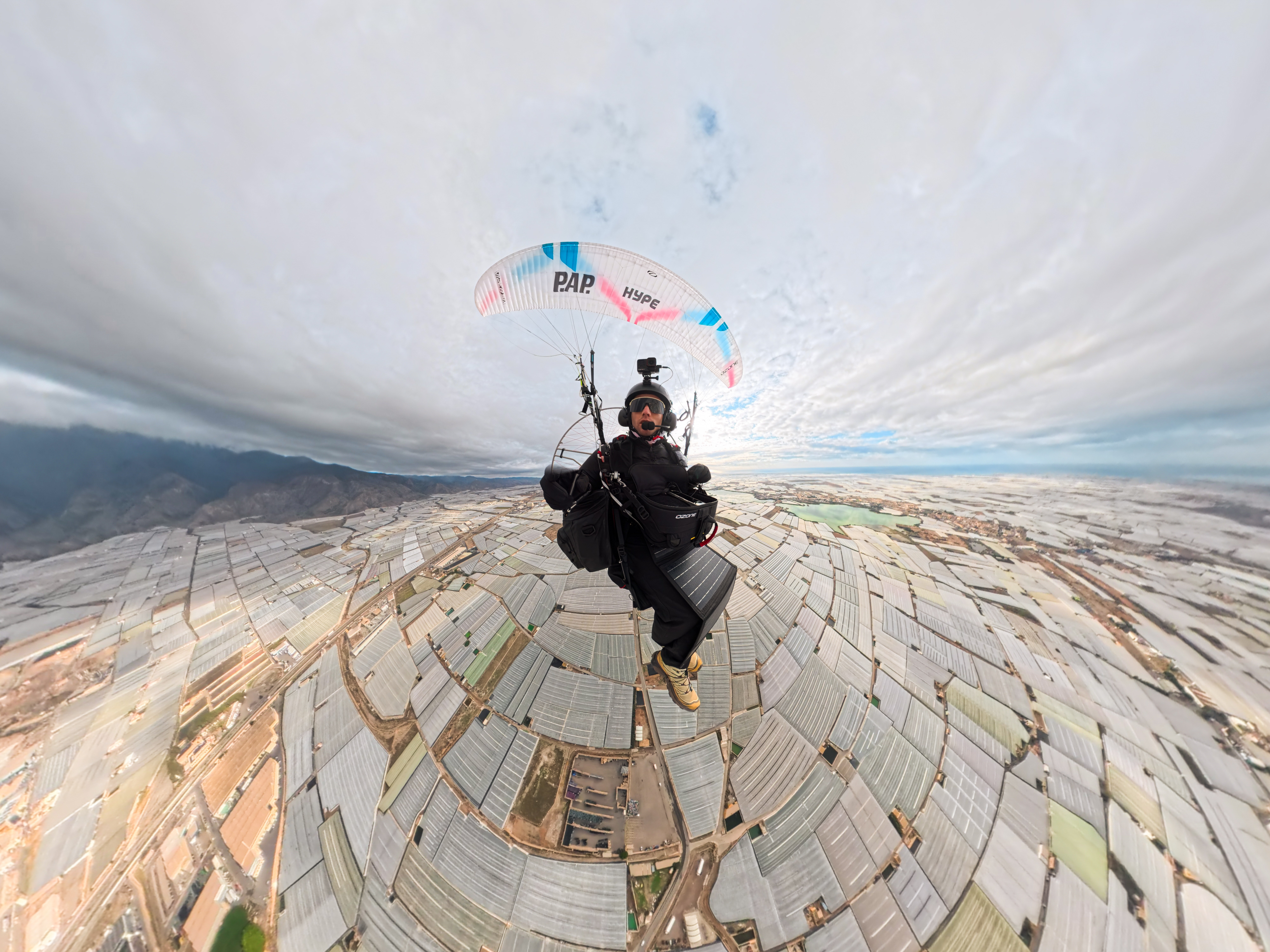
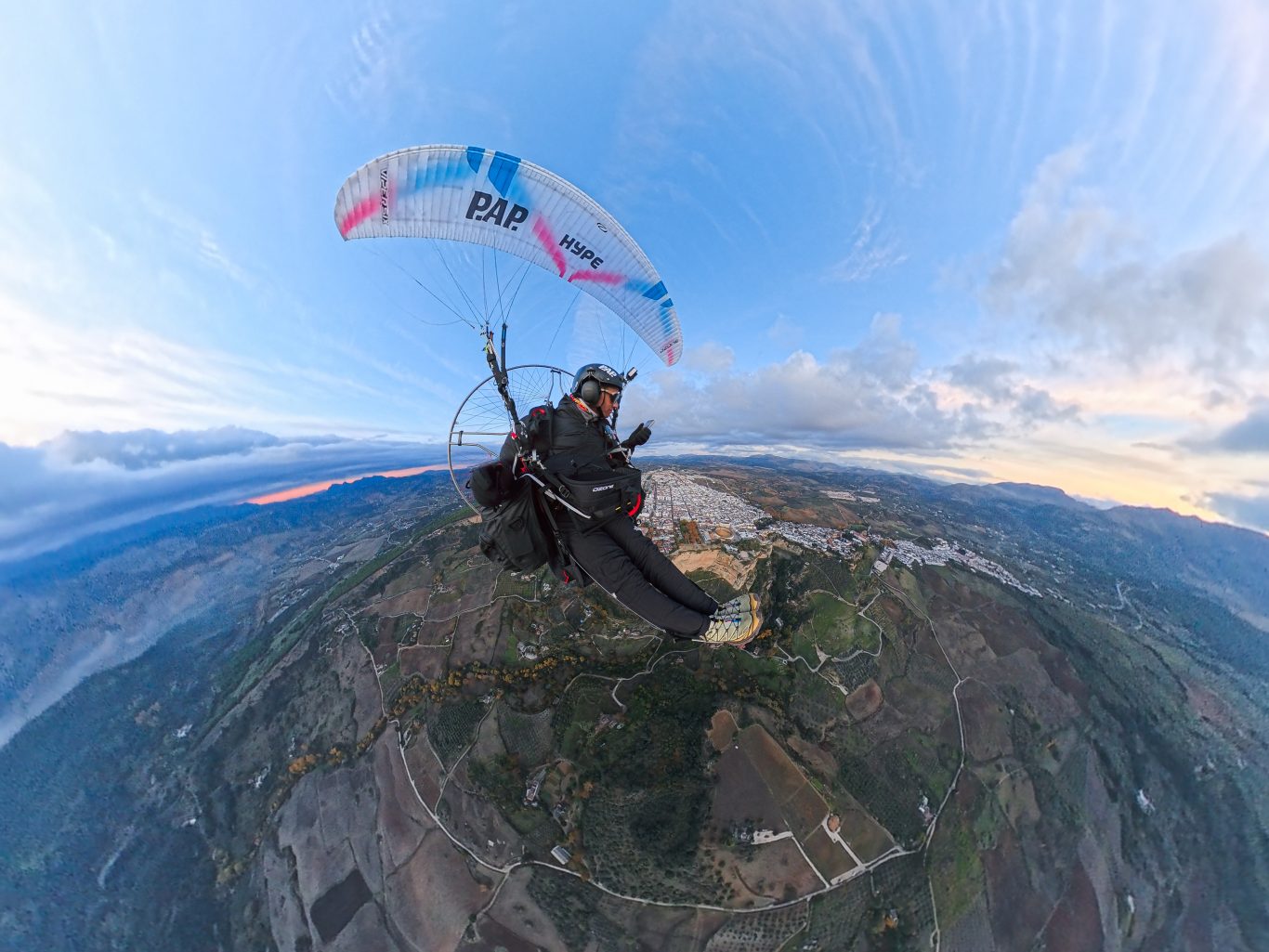
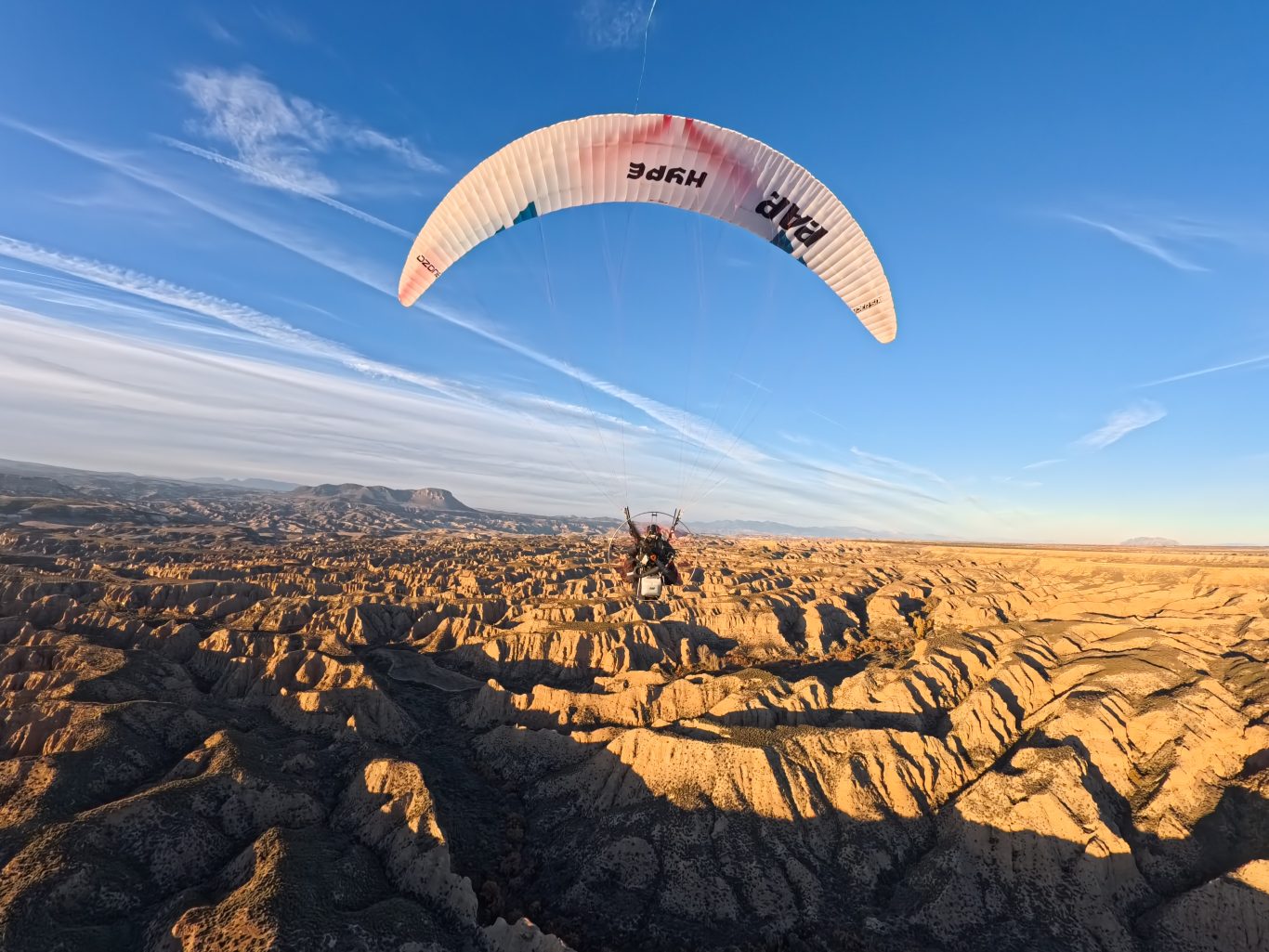
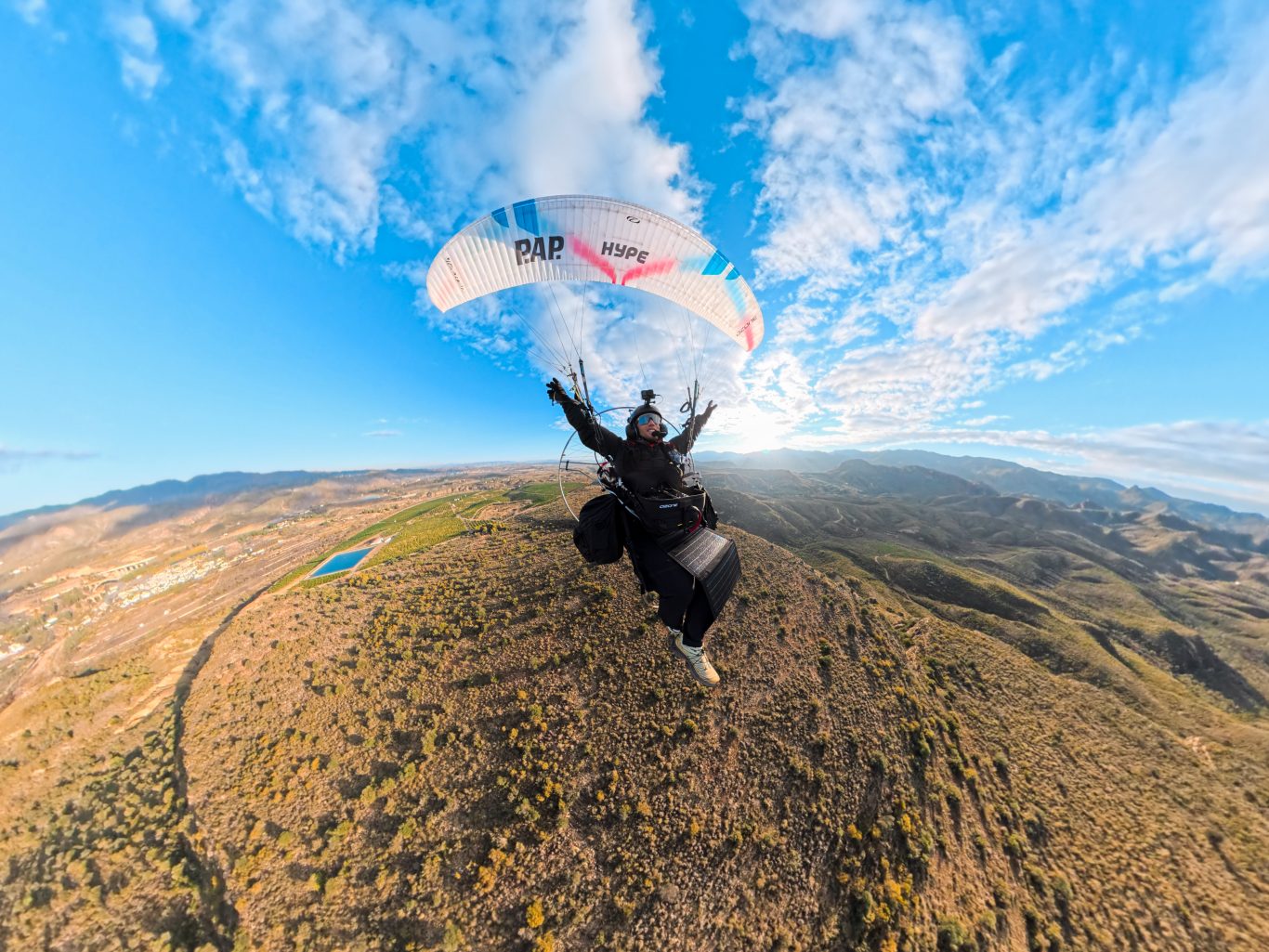
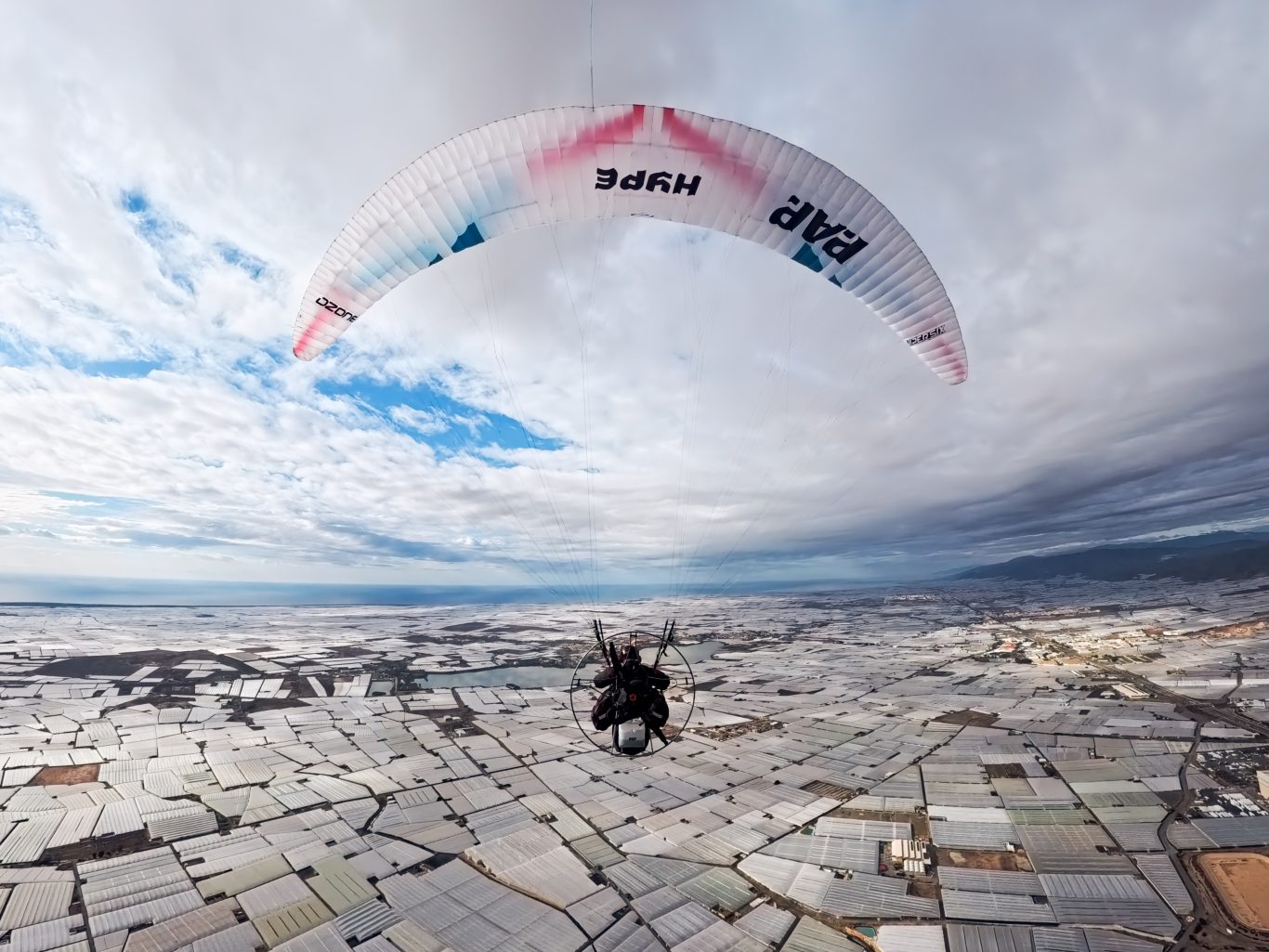
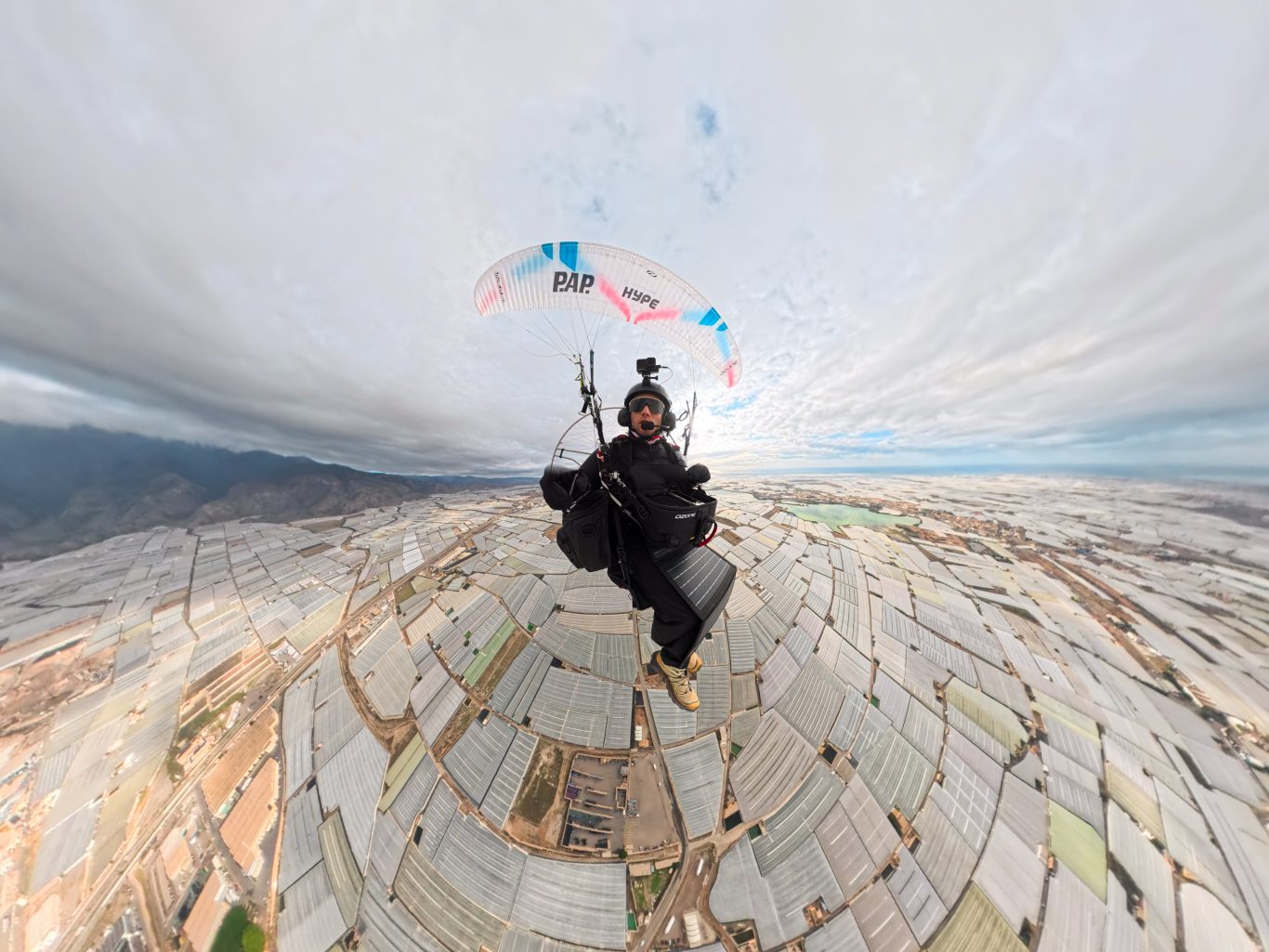
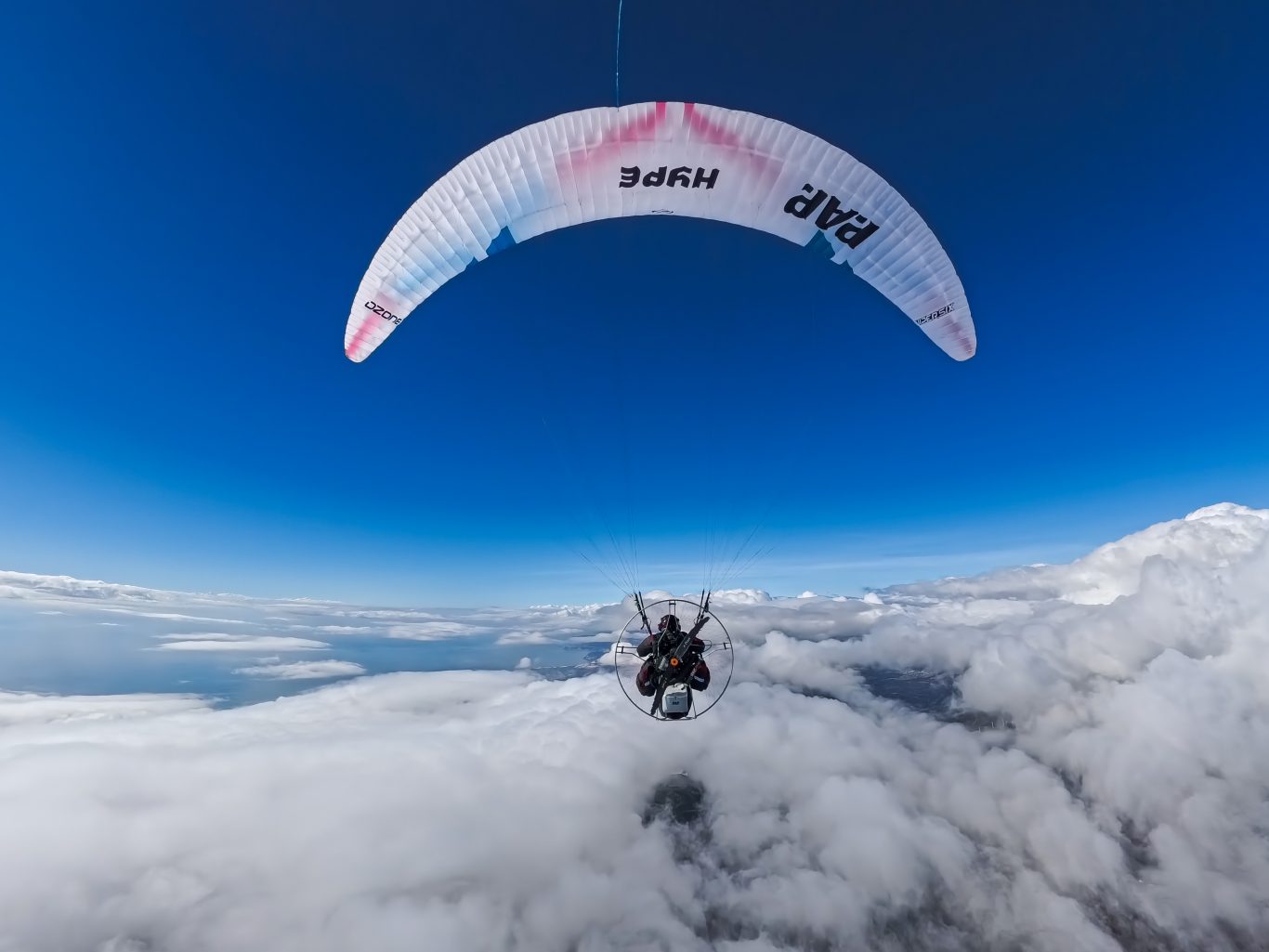
One of these adventures is the journey of Nicolas Aubert, who chose to cross Andalusia by paramotor relying solely on his own skills. No support vehicles, no team following him: just Nico and his trusted Moster185 Plus MY25, which accompanied him throughout the entire route with comfort and power.
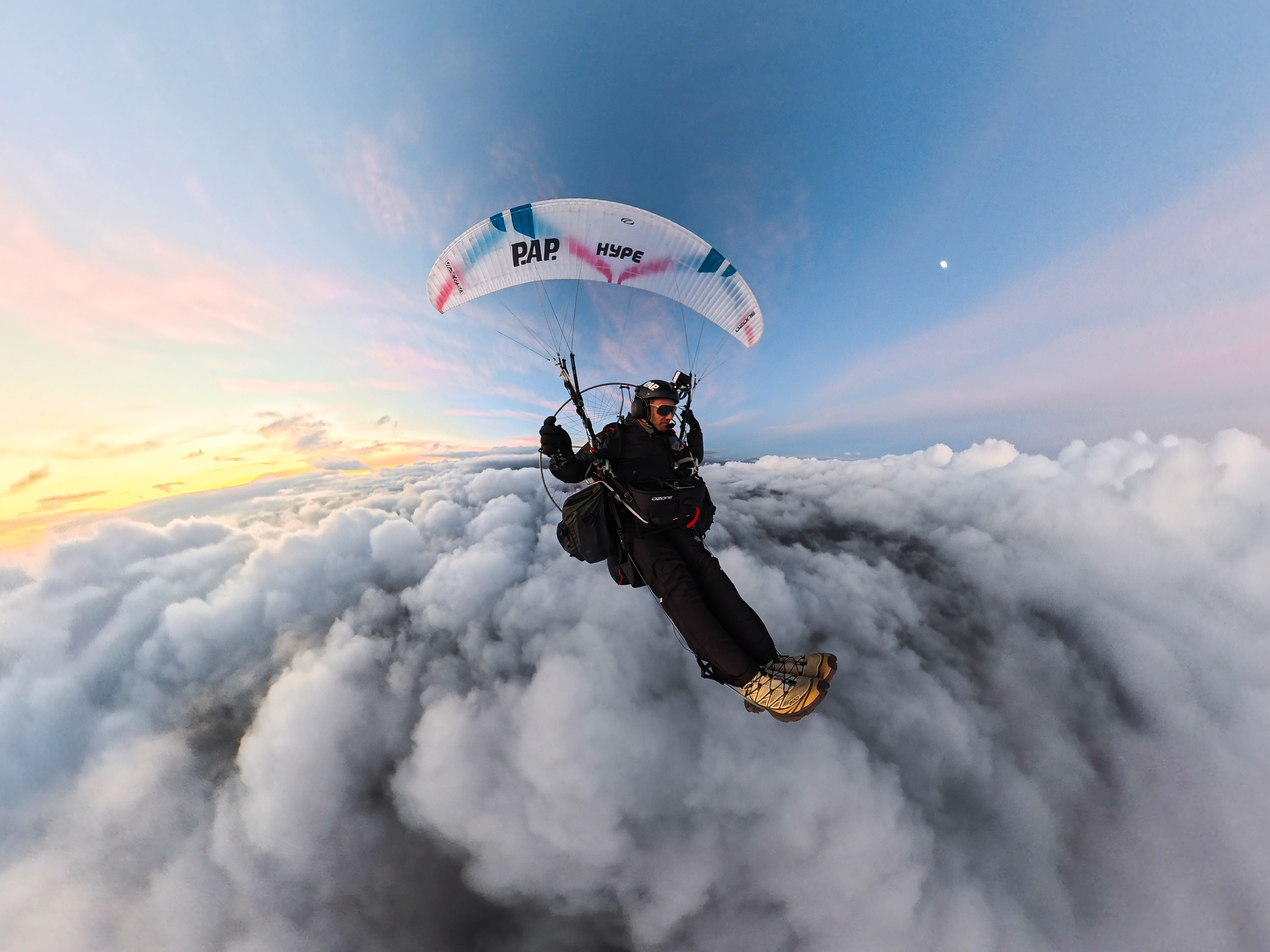
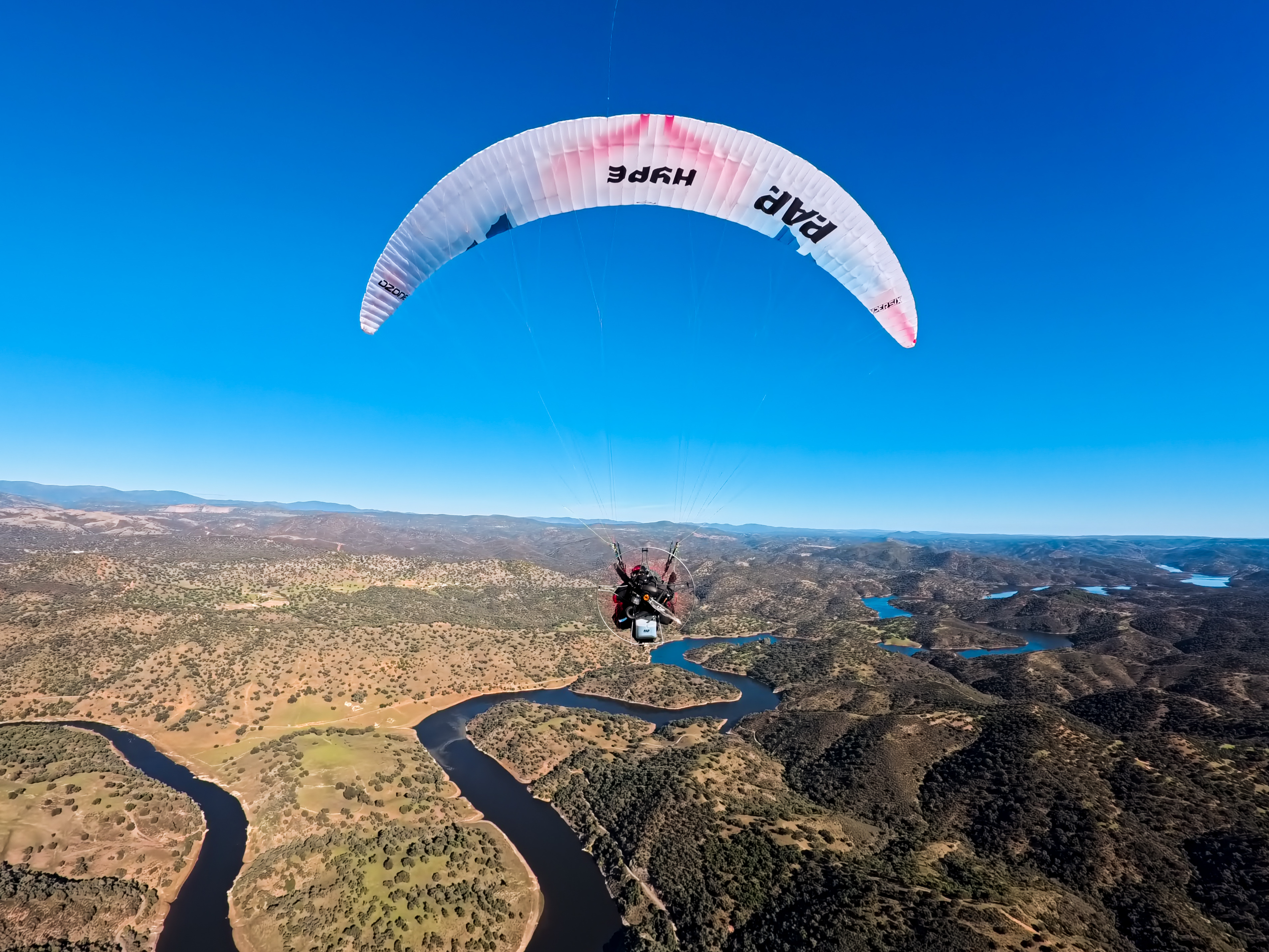
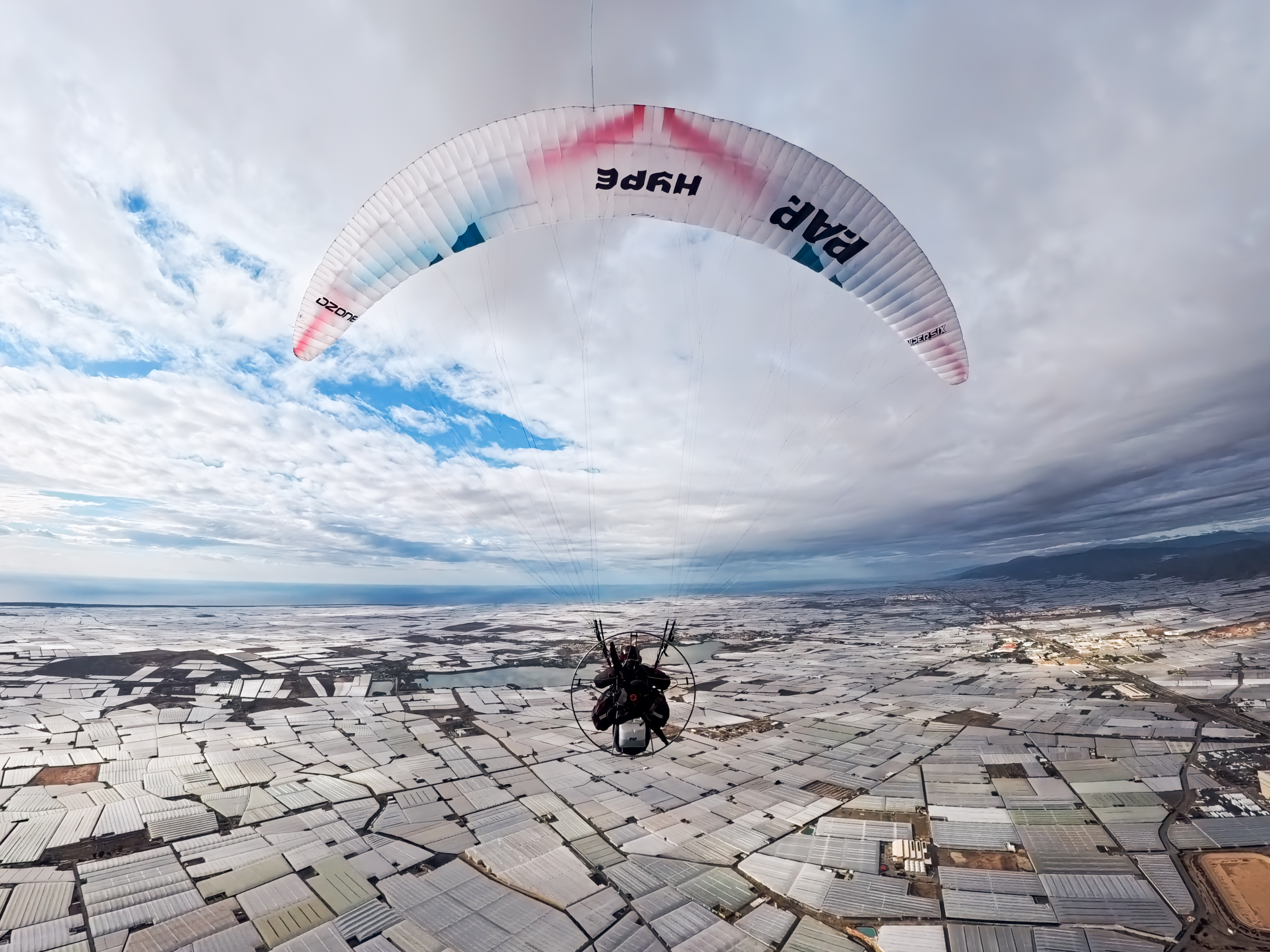
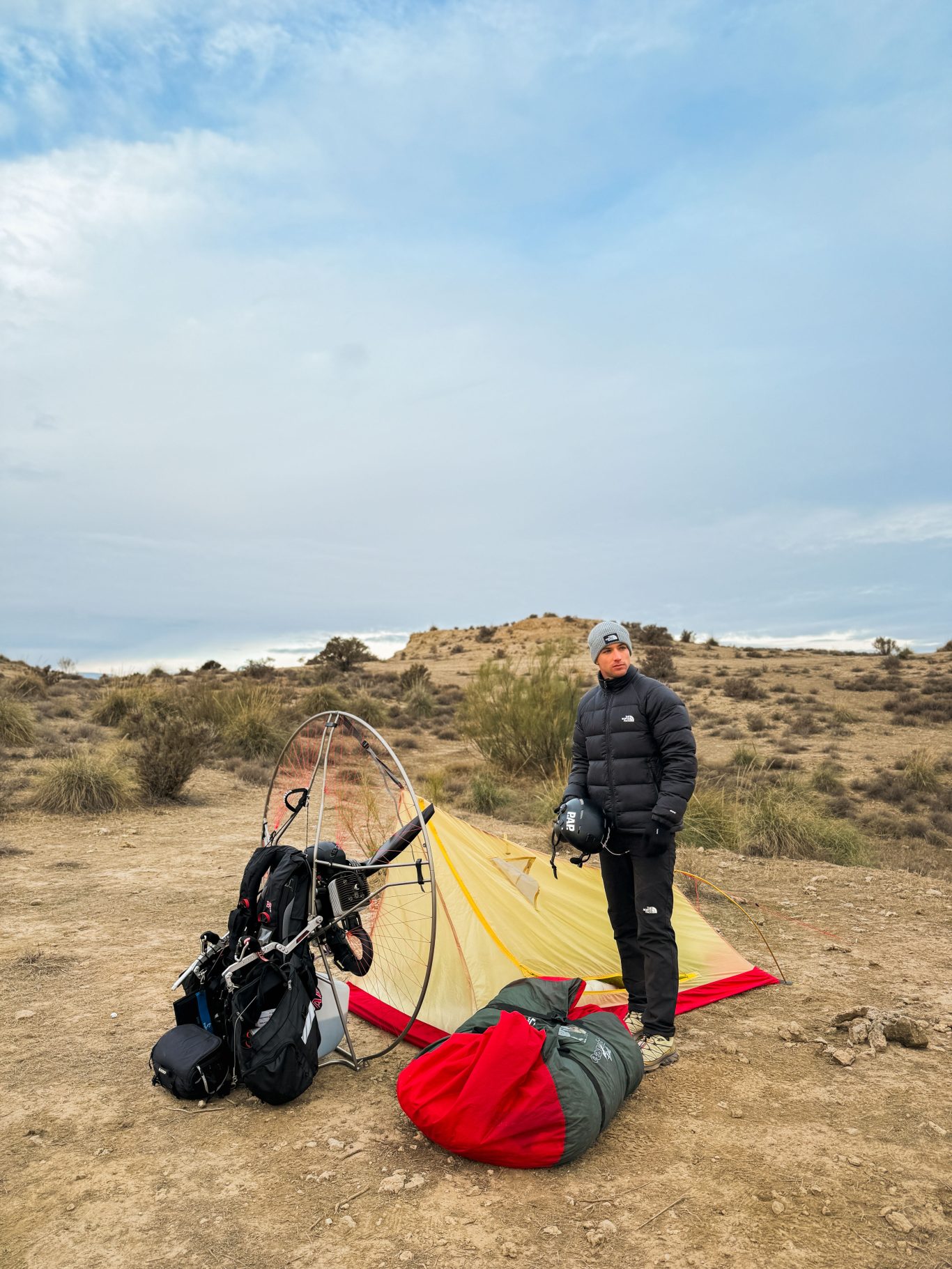
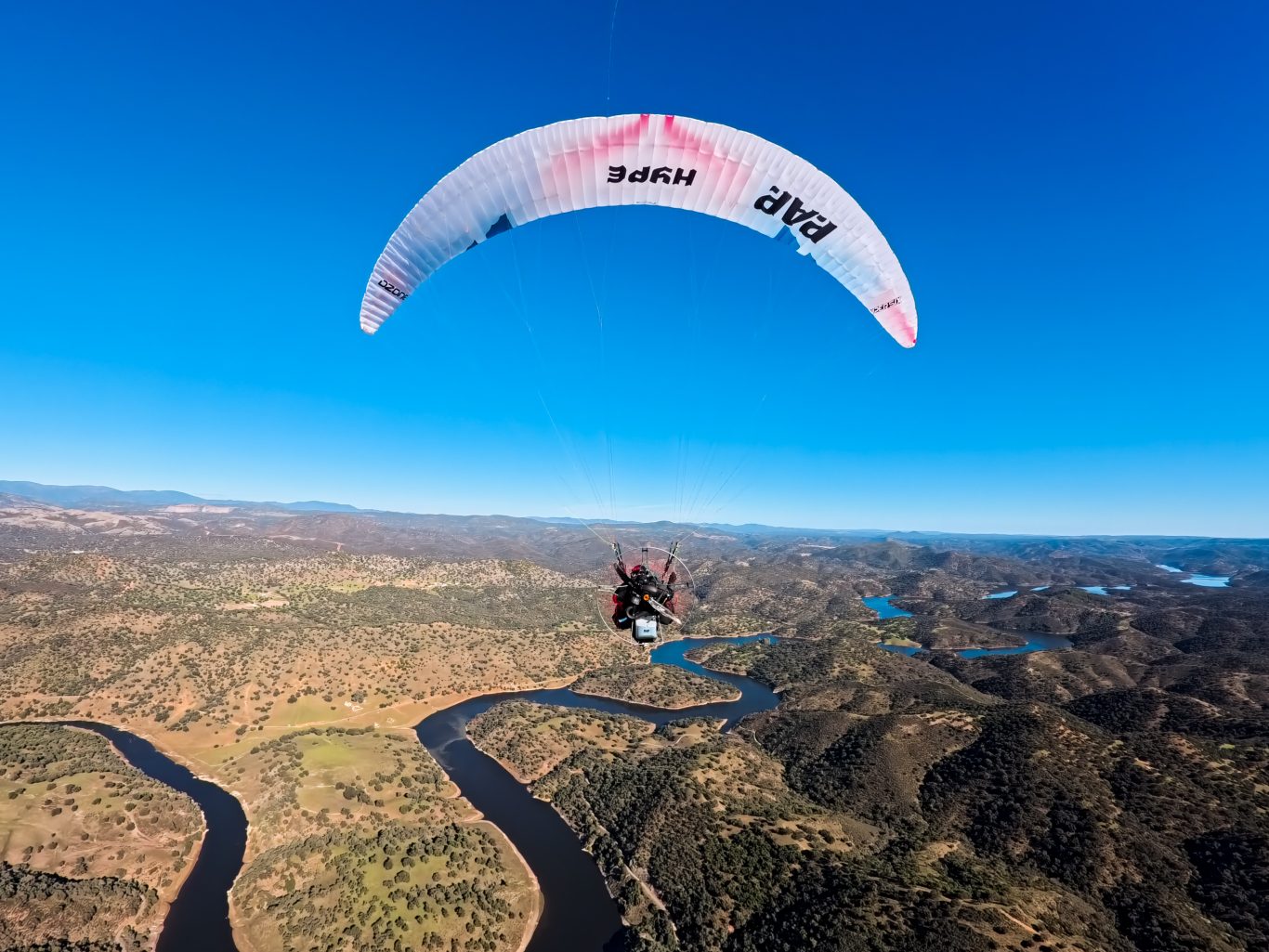
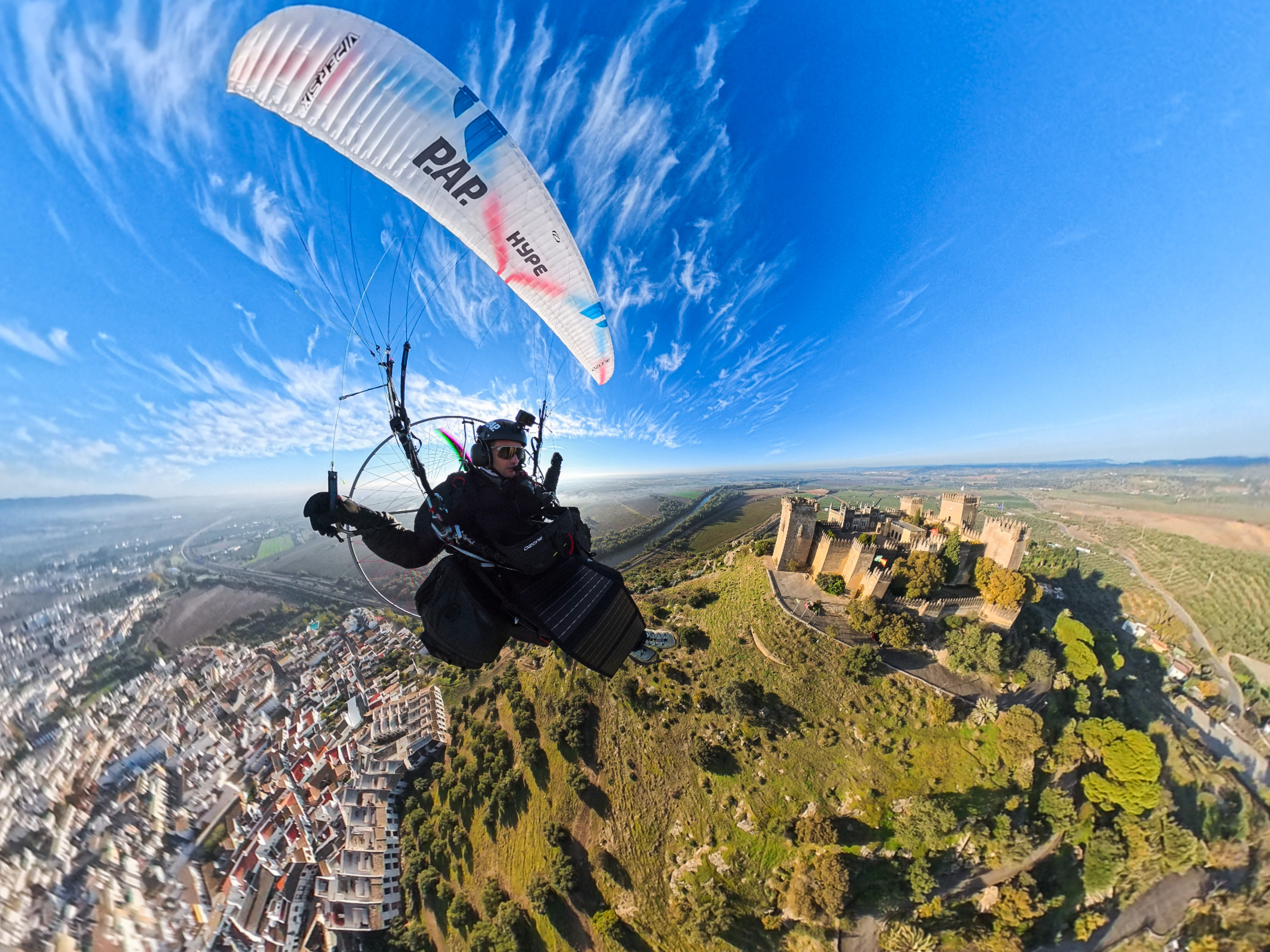
To take on such a demanding crossing, every detail of the equipment must be flawless. That is why Nico, in addition to his engine, chose the PAP TINOX V2 1400 paramotor, paired with the Ozone Viper6 wing. A perfect combination that guaranteed complete synergy between technology, experience and reliability.
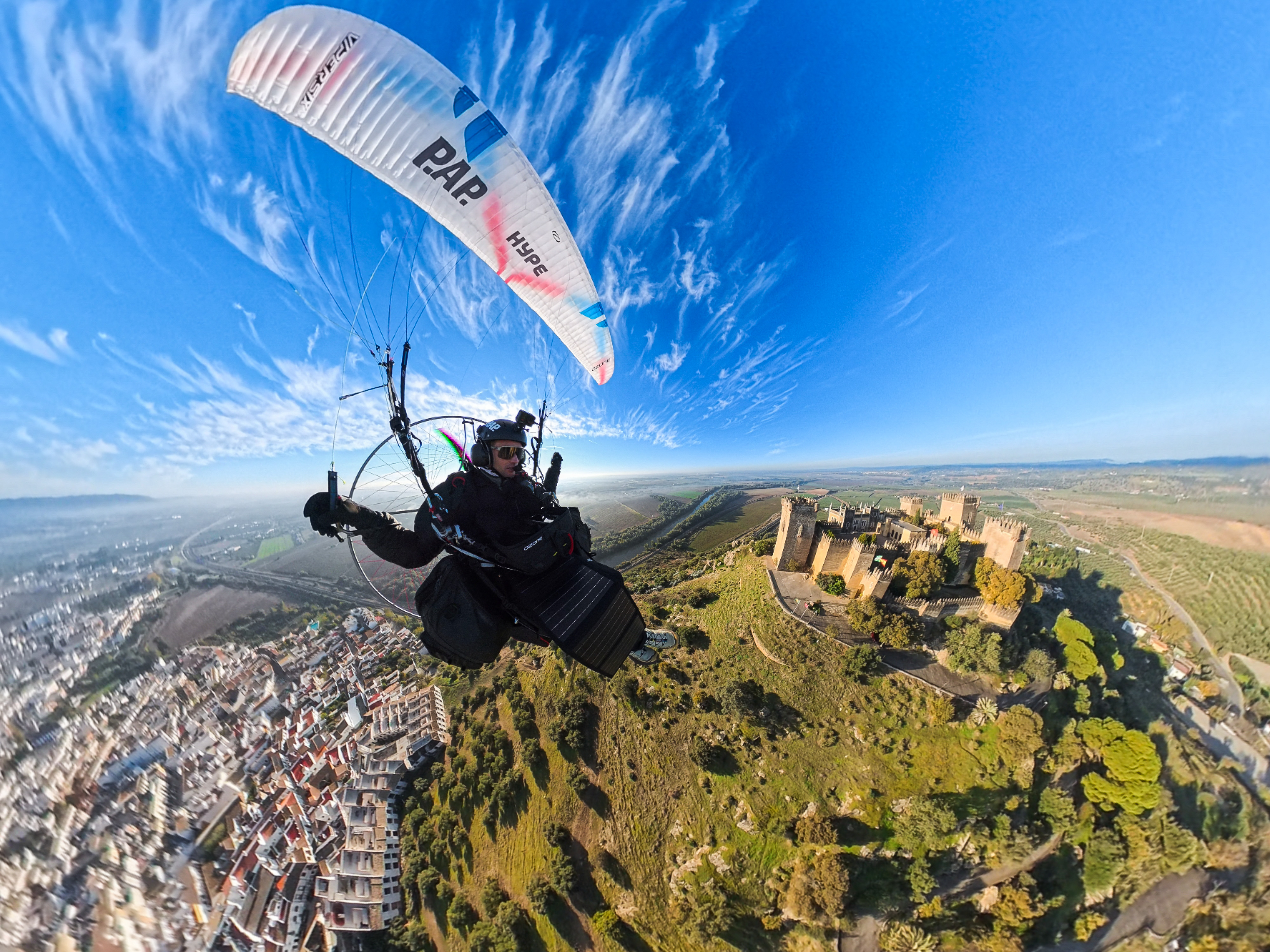
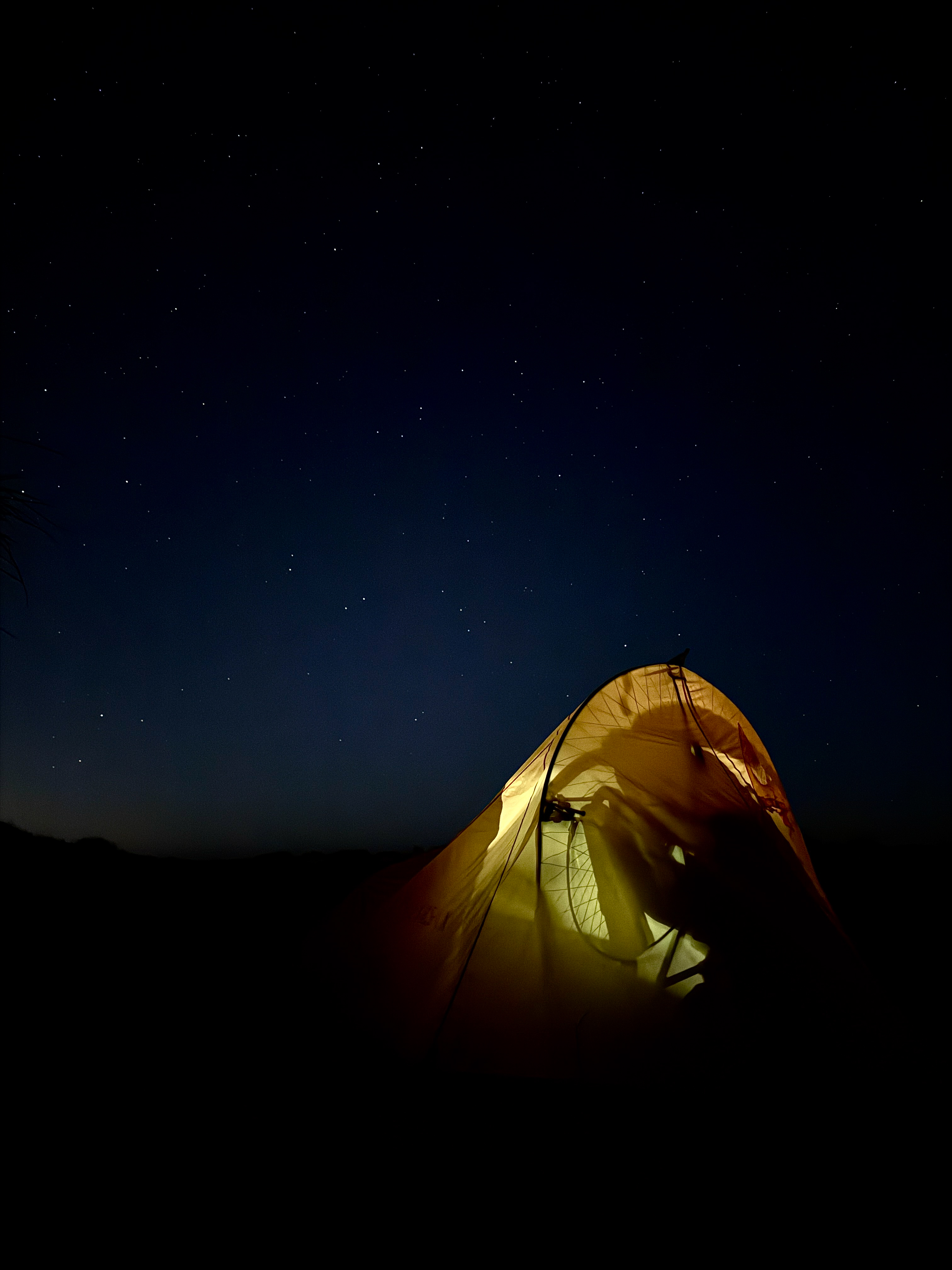
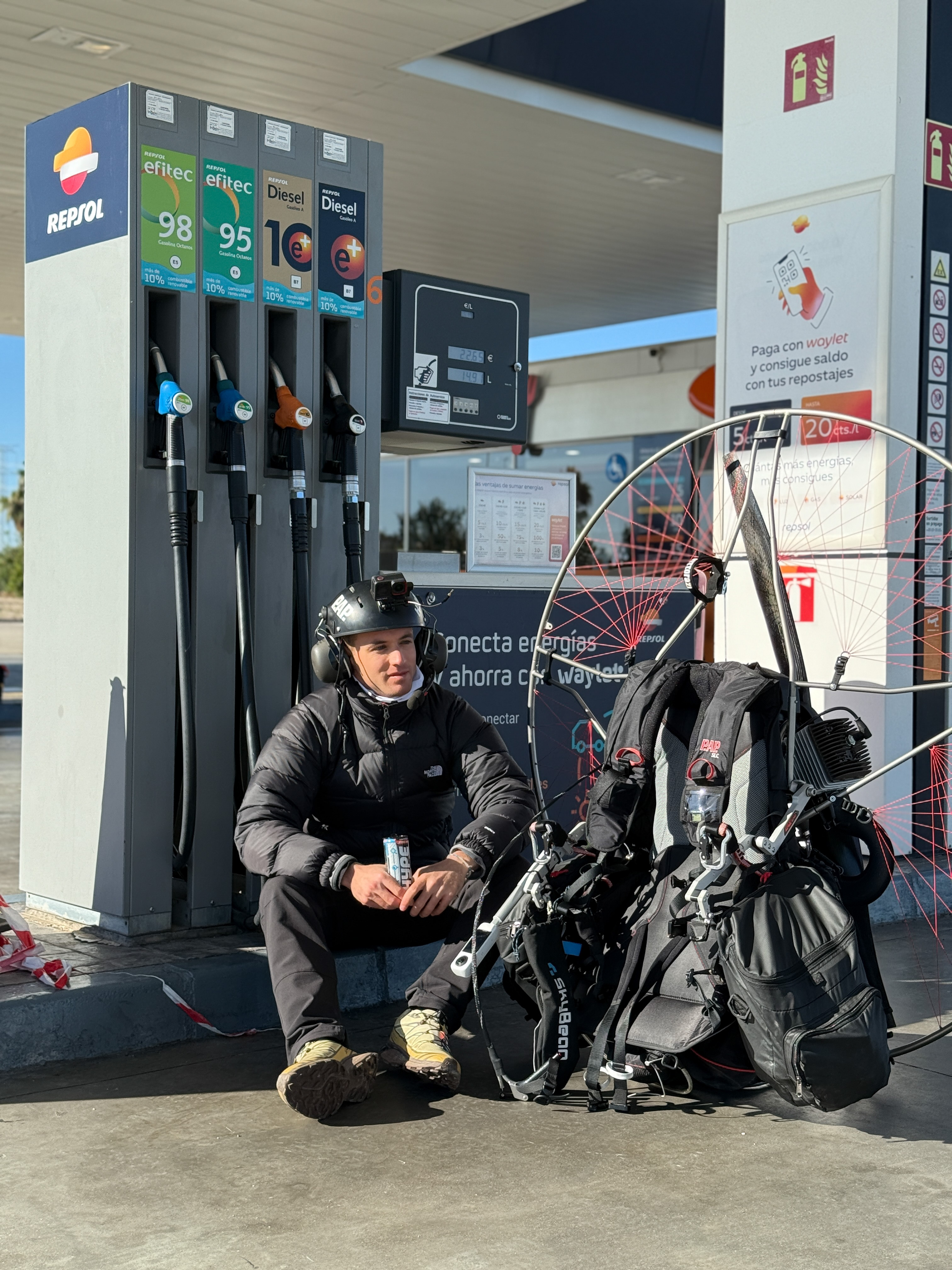
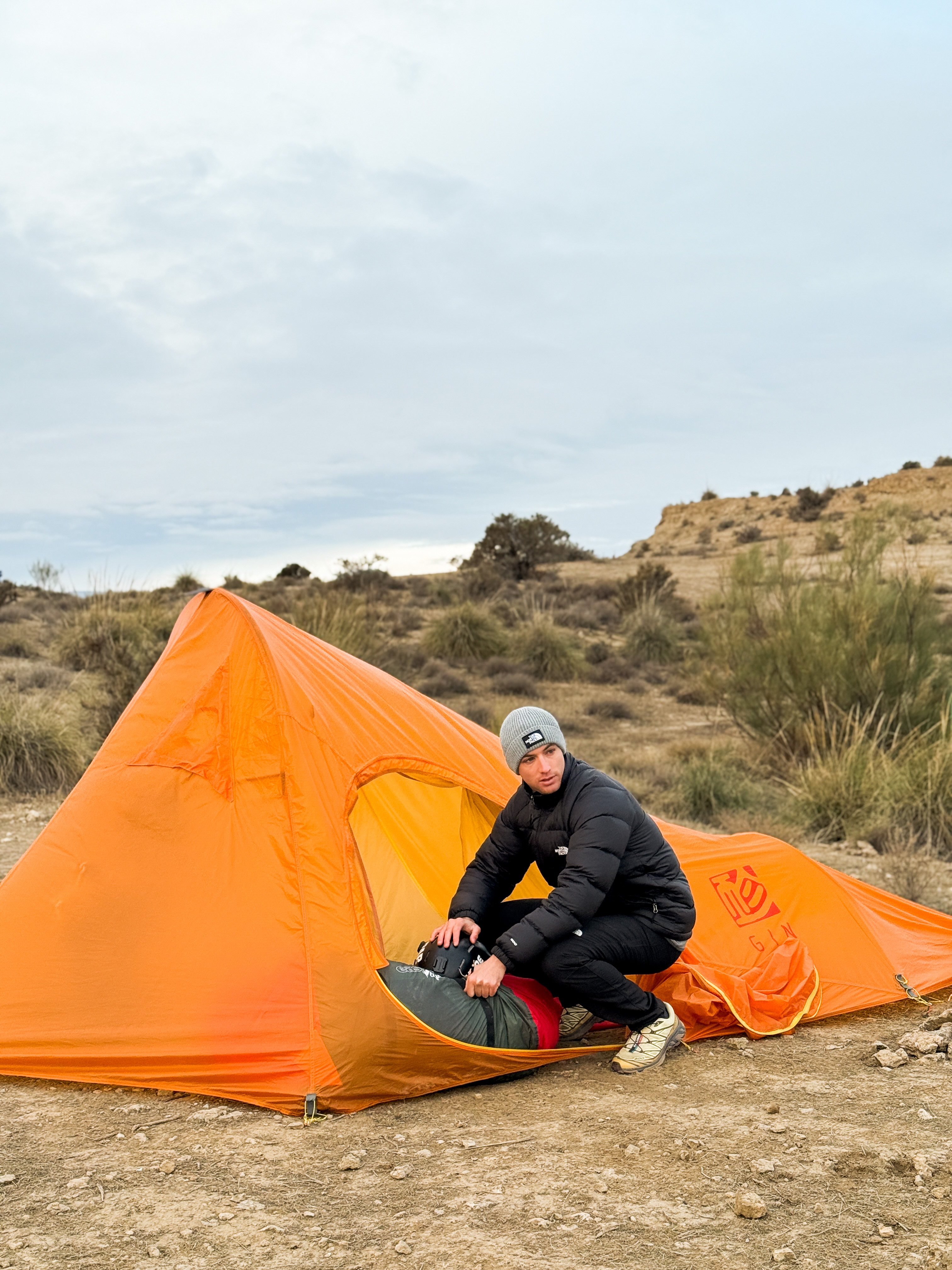
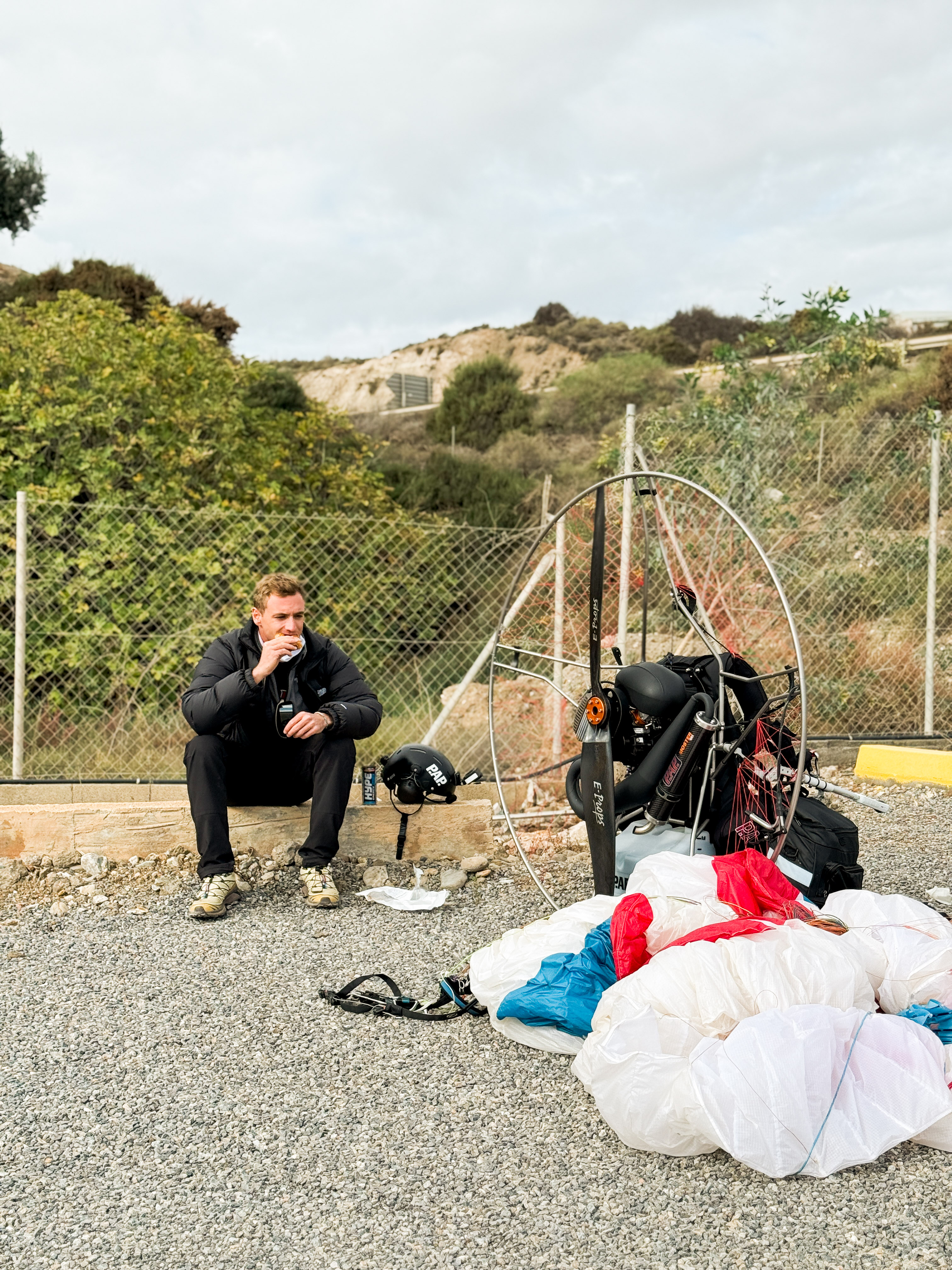
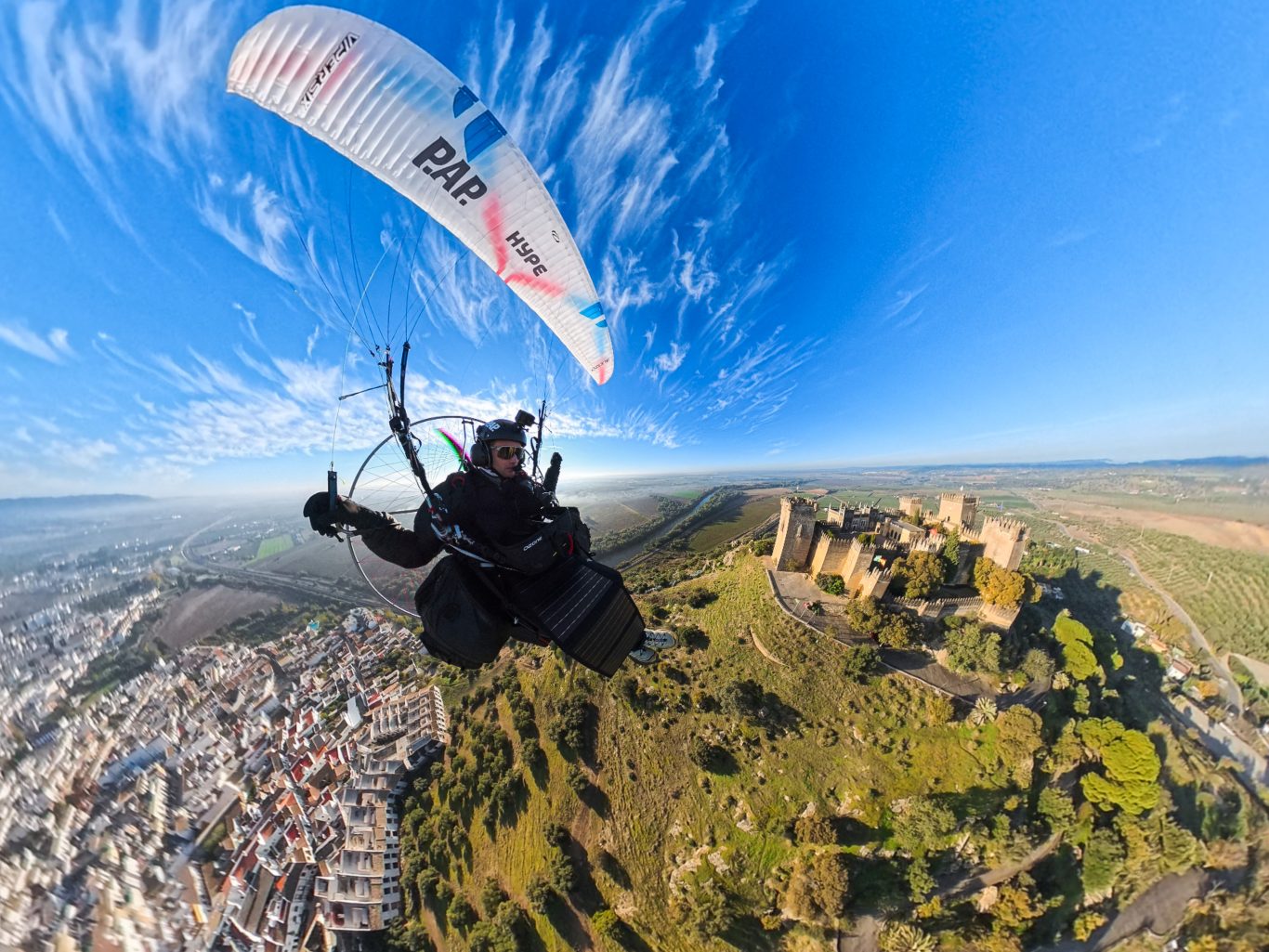
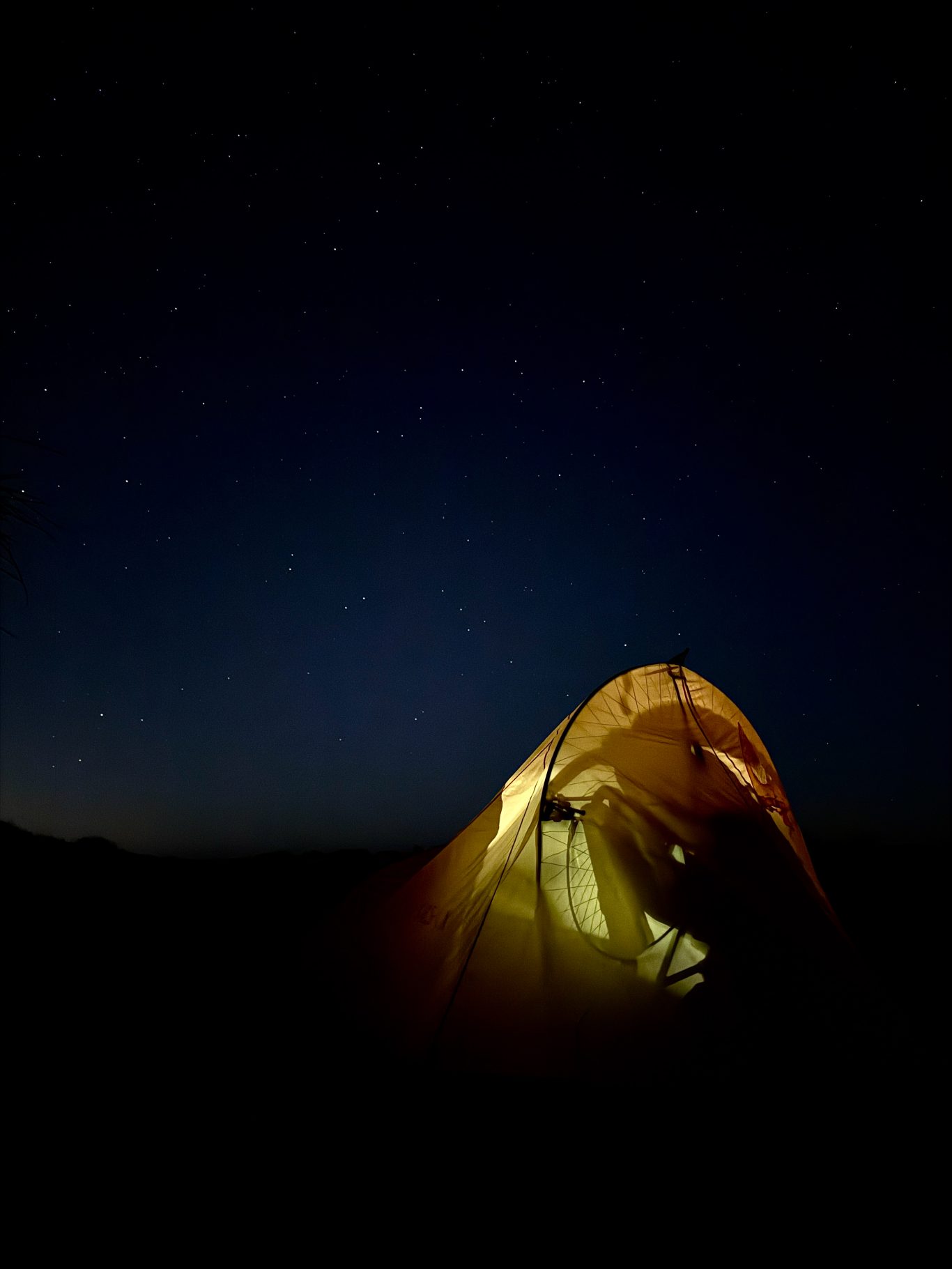
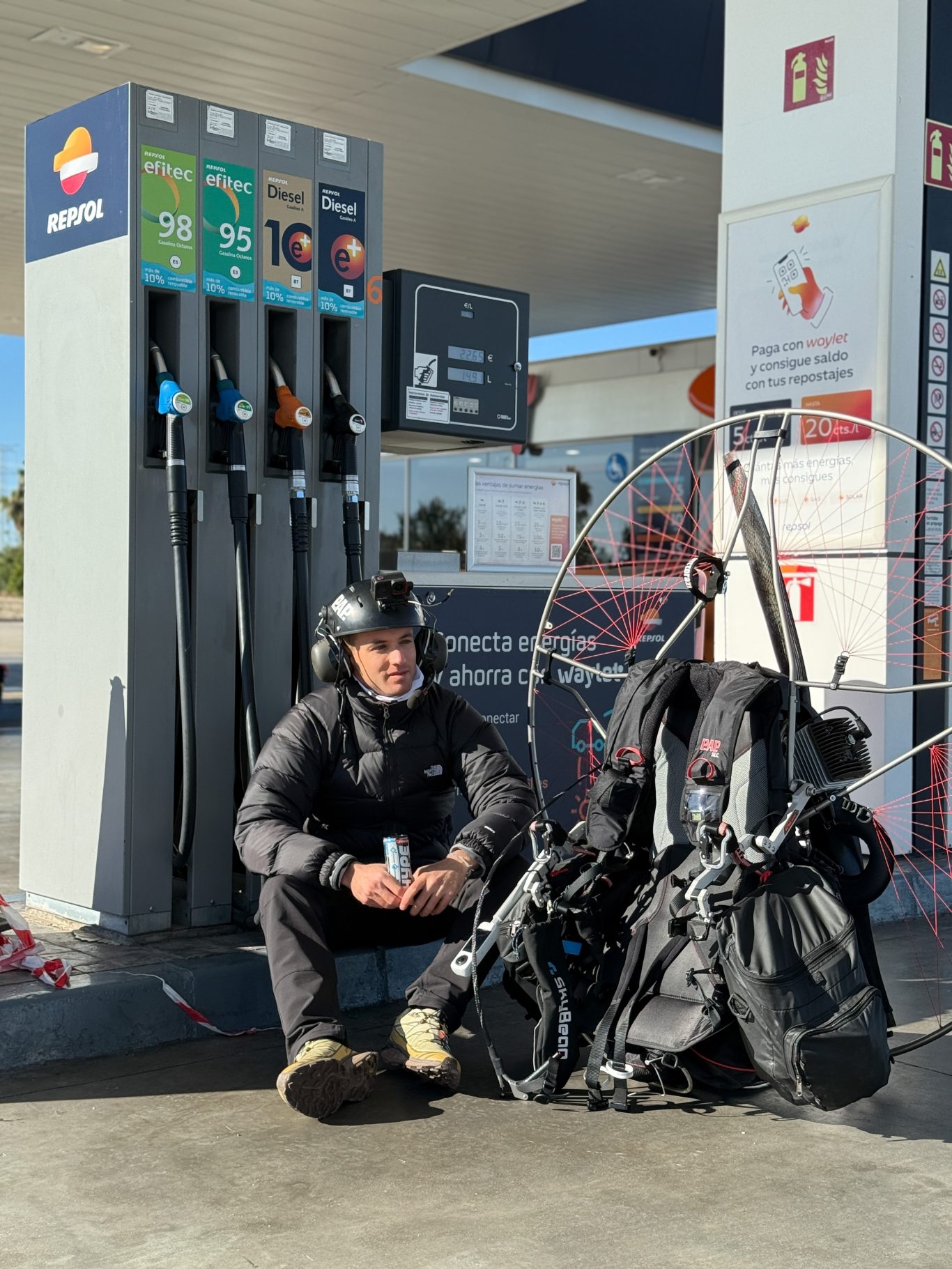
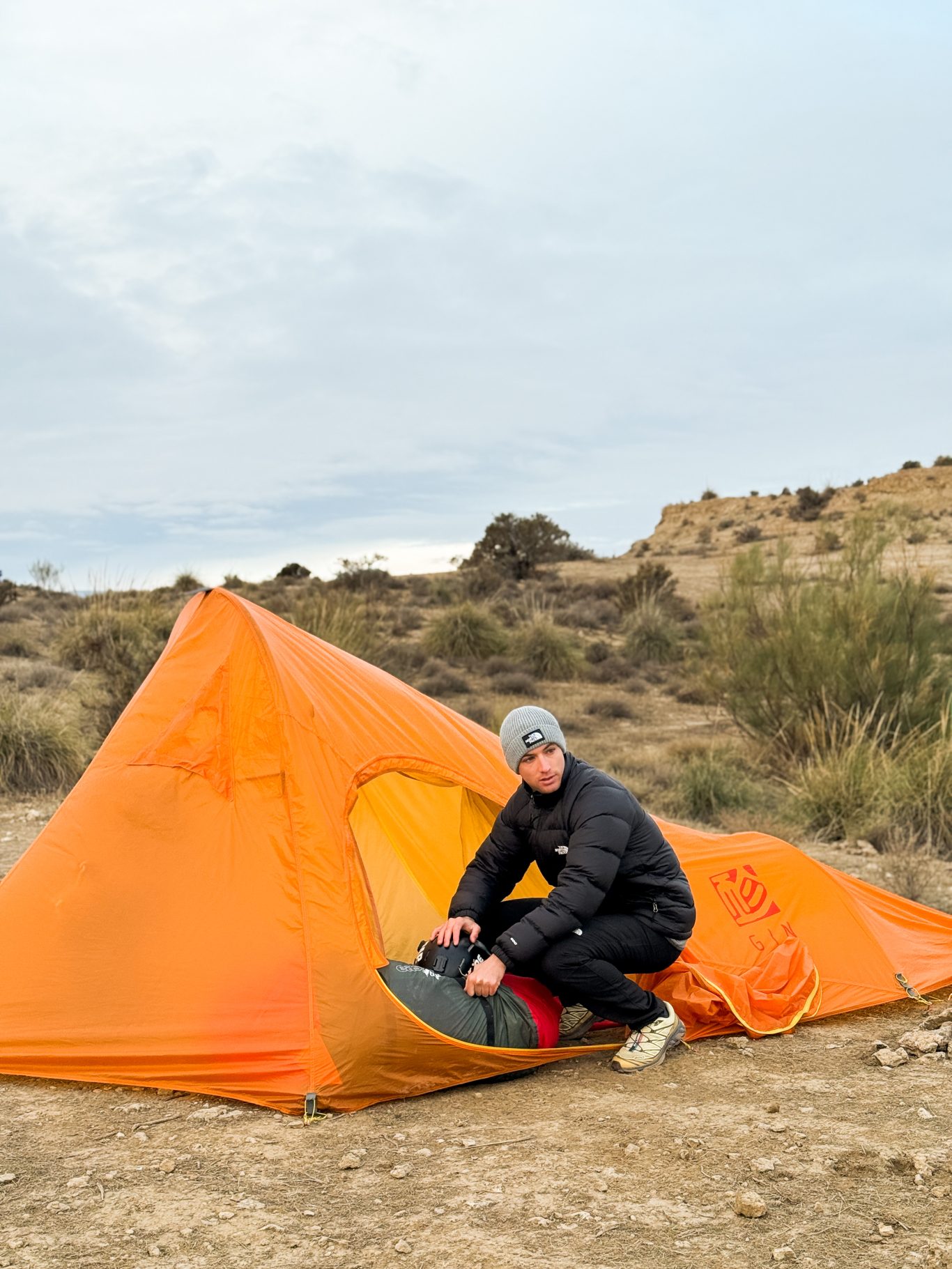
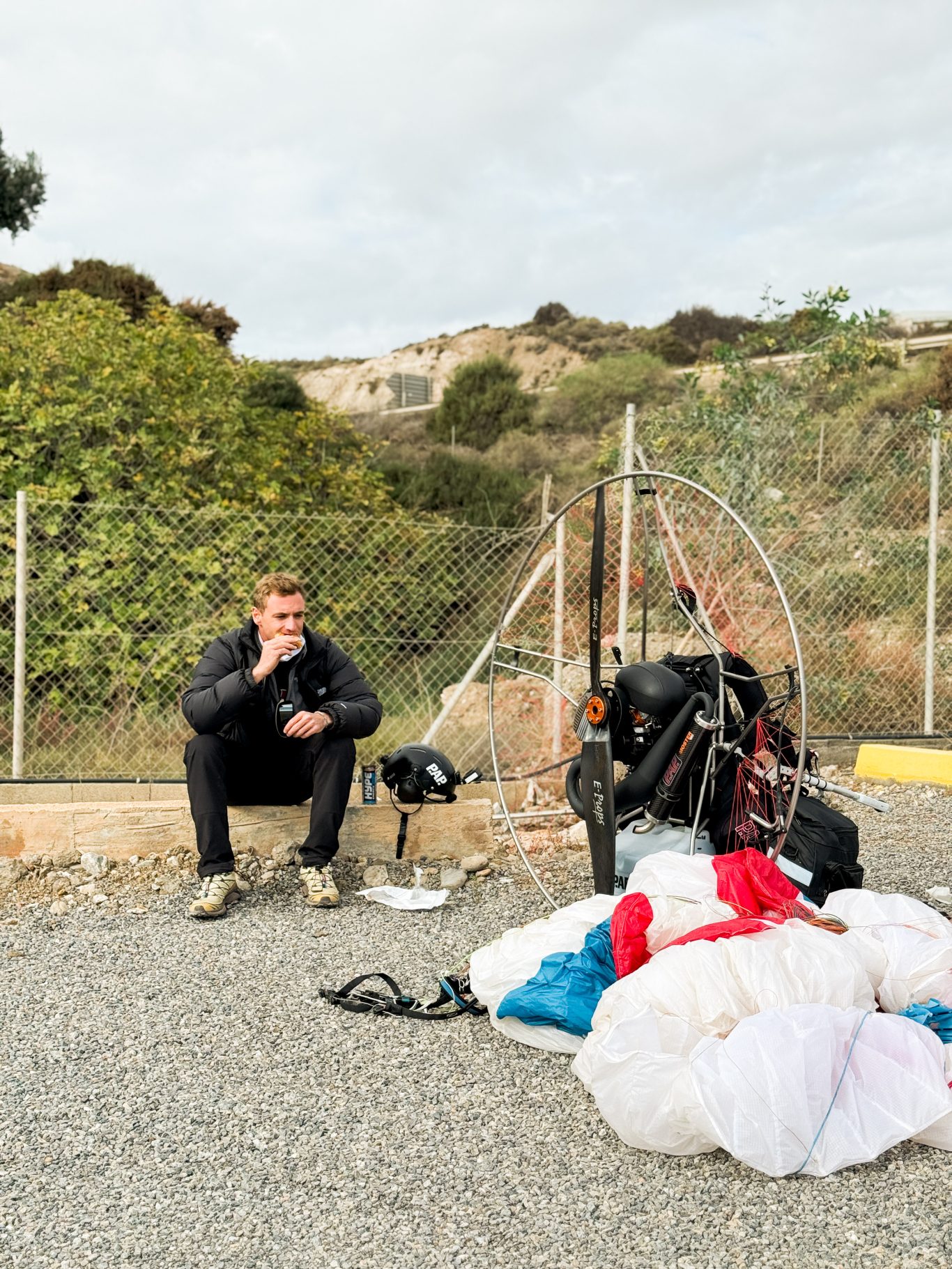
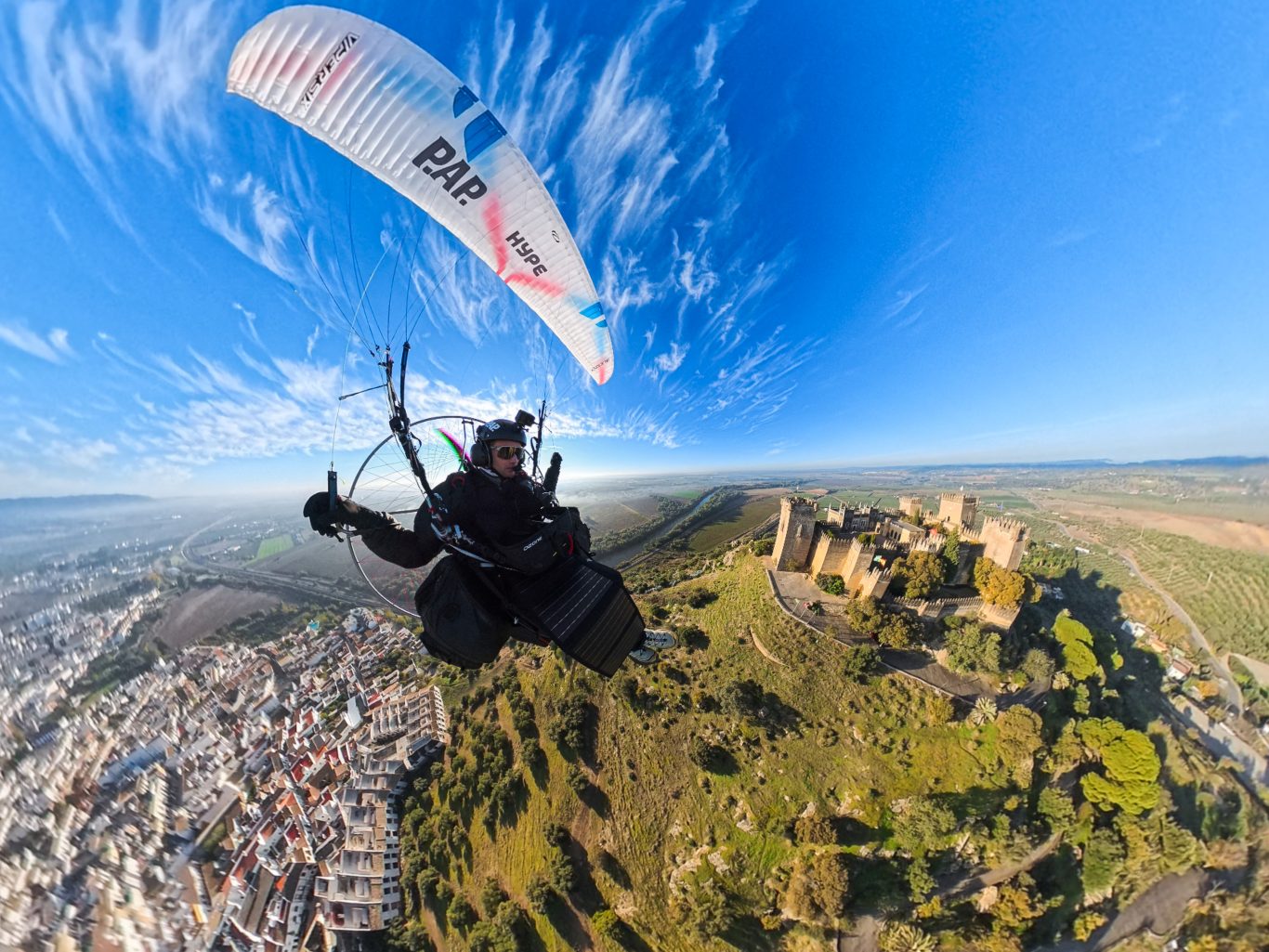
After careful planning, Nico took off on November 28 from Punta Umbría. Four days later, on December 1, he reached his home in Estepona, completing a 1,083-kilometre crossing and logging more than 21 hours of flight time. Packed into two compact side bags were only the essentials: a tent, a sleeping bag, a sleeping mat, a water bottle, a power bank and very few other items. By day, he flew over cities, castles and mountains. By night, he bivouacked surrounded by nature. For refuelling, he landed at service stations, often drawing curious and amused looks from motorists who never expected to see a paramotor parked next to fuel pumps.
This crossing is part of Nico’s personal World Arcs Project, a long-term journey that began in 2023 with his first bivouac crossing of Spain from north to south. After that experience, Nico decided to push himself further, connecting entire regions and countries through long-distance paramotor flights. In 2024, he crossed Portugal, and now in 2025, he has flown across Andalusia, a land he feels deeply connected to and which, seen from above, reveals an extraordinary diversity of landscapes.
It is Nico himself who tells us what it really means to face such a journey and the emotions experienced during the flight.
How do you prepare for an adventure like this, both practically and psychologically?
For a multi day bivouac paramotor flight, preparation is mainly about experience and decision making. You need enough flight hours to safely handle very different conditions, because you never fully know what you will face on a long route. From a psychological point of view, you must really enjoy adventure and solitude.
Is there anyone you would have liked to share this experience with? Or do you prefer to be alone?
At the moment, I prefer to do this type of adventure alone. Solitude helps me stay focused and fully connected to the flight. That said, I am open to sharing future projects if the adventure calls for it.
Was there a moment when you said, no, I can’t do it?
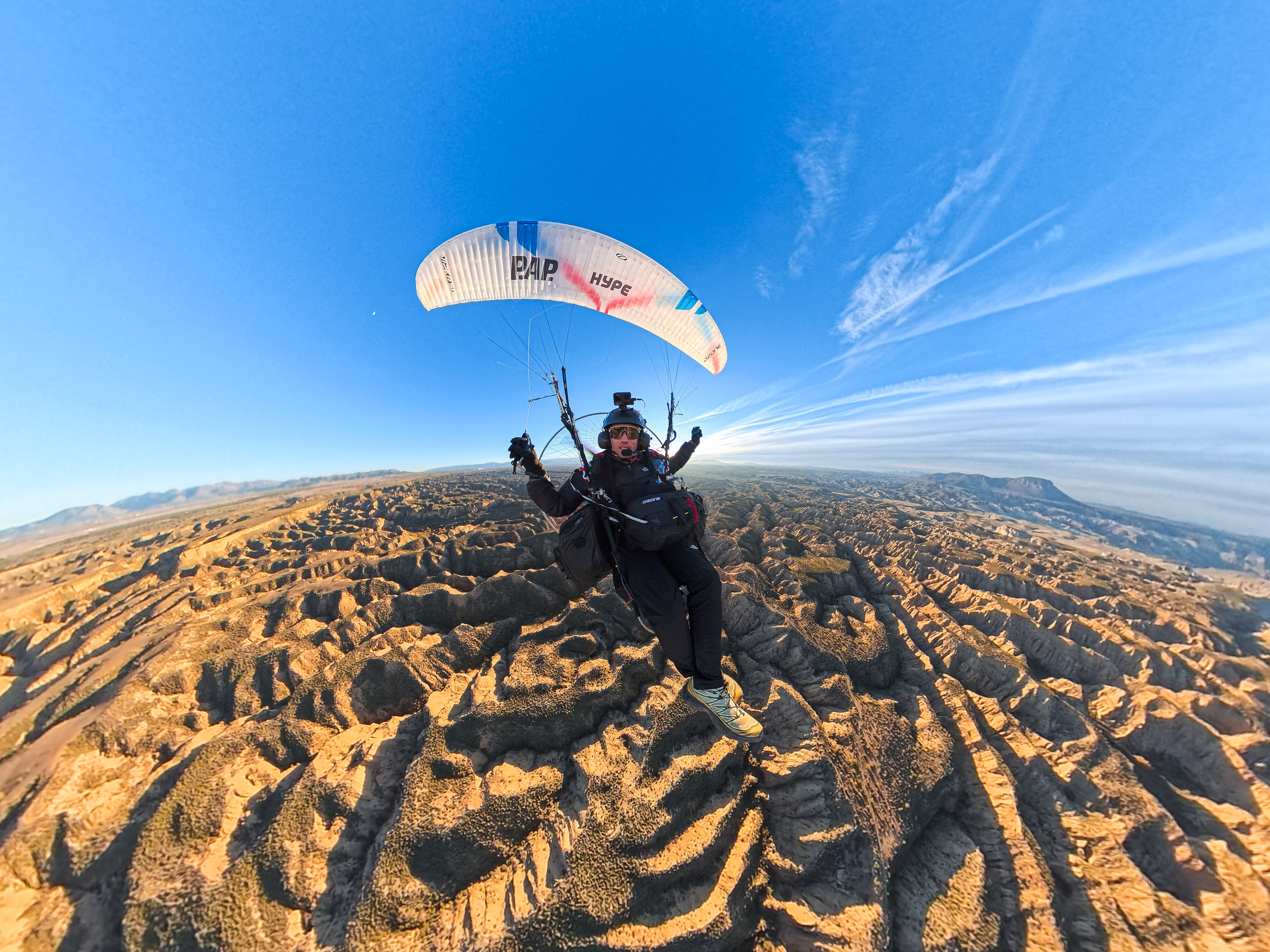
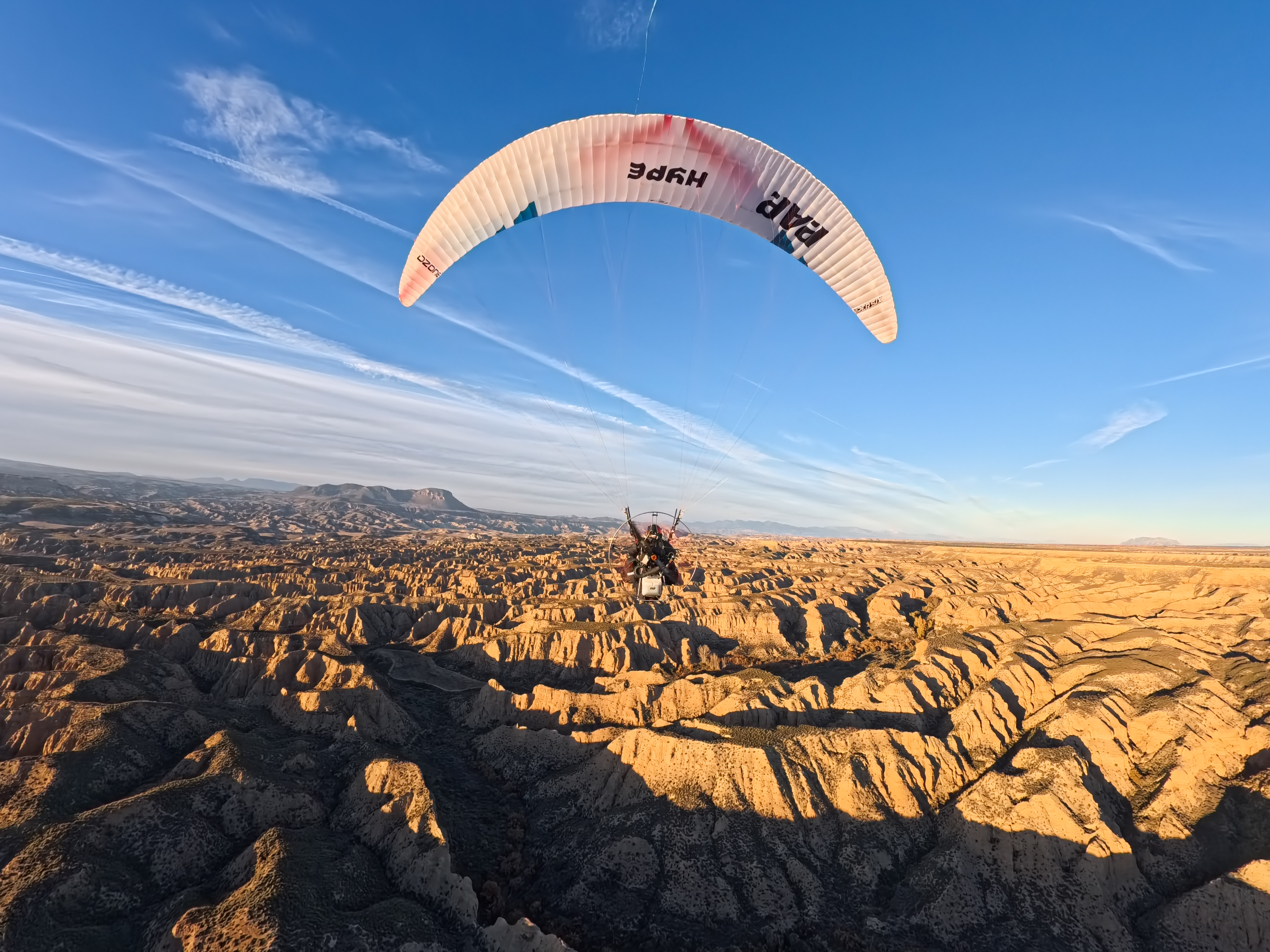
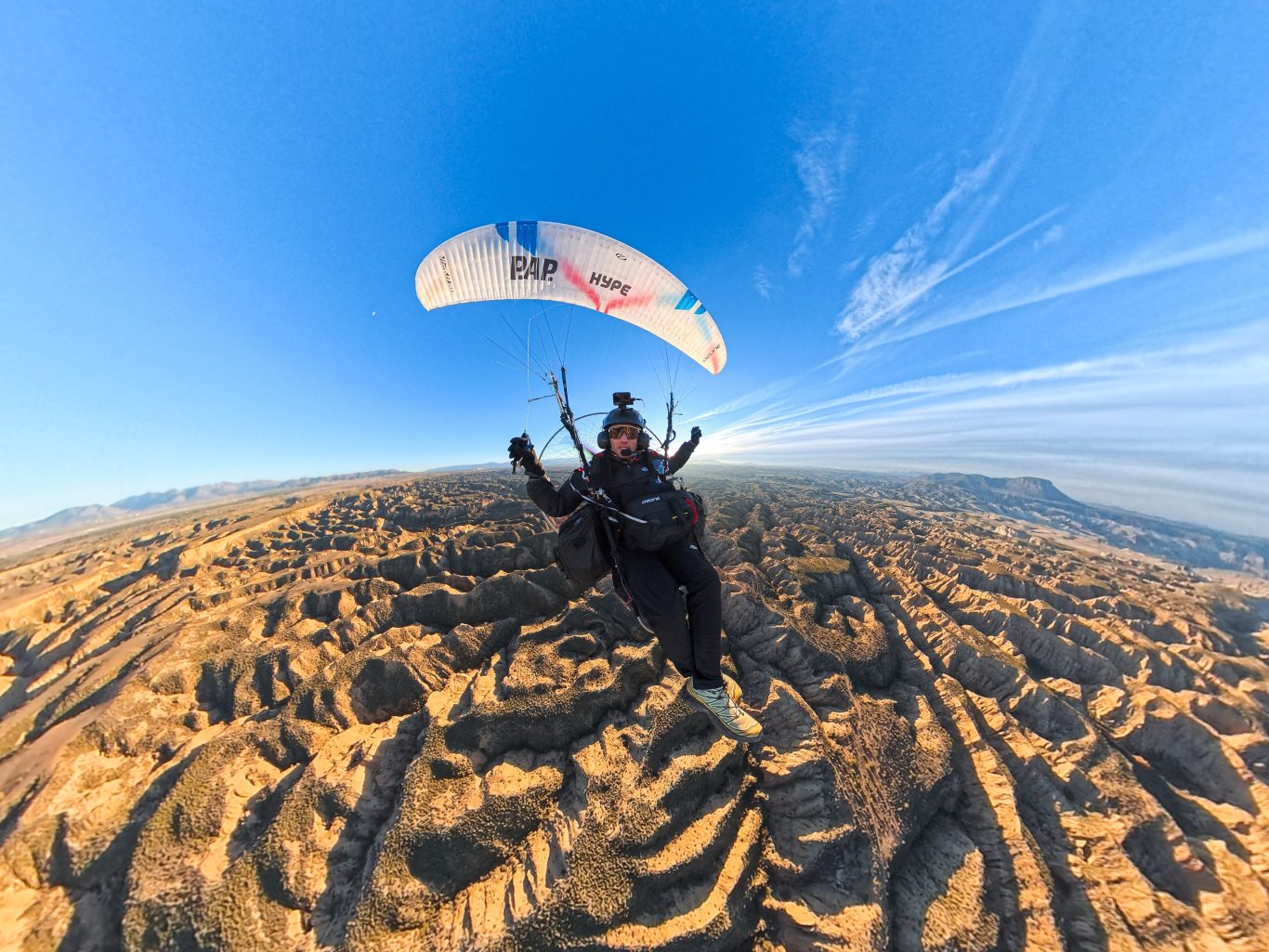
There was a critical moment when I was approaching the Gorafe Desert. The air was very turbulent, so I made the decision to land and wait about thirty minutes until conditions improved. Being able to stop, assess and restart safely is part of this kind of expedition. I also faced several very cold flights, which were physically demanding but part of the challenge.
Best and worst moment of the trip?
The hardest moments were related to the cold, especially during long flights. The best moments were those when everything worked perfectly and I could focus only on flying, navigation and enjoying the landscape.
Tell us about the most beautiful places you saw from above.
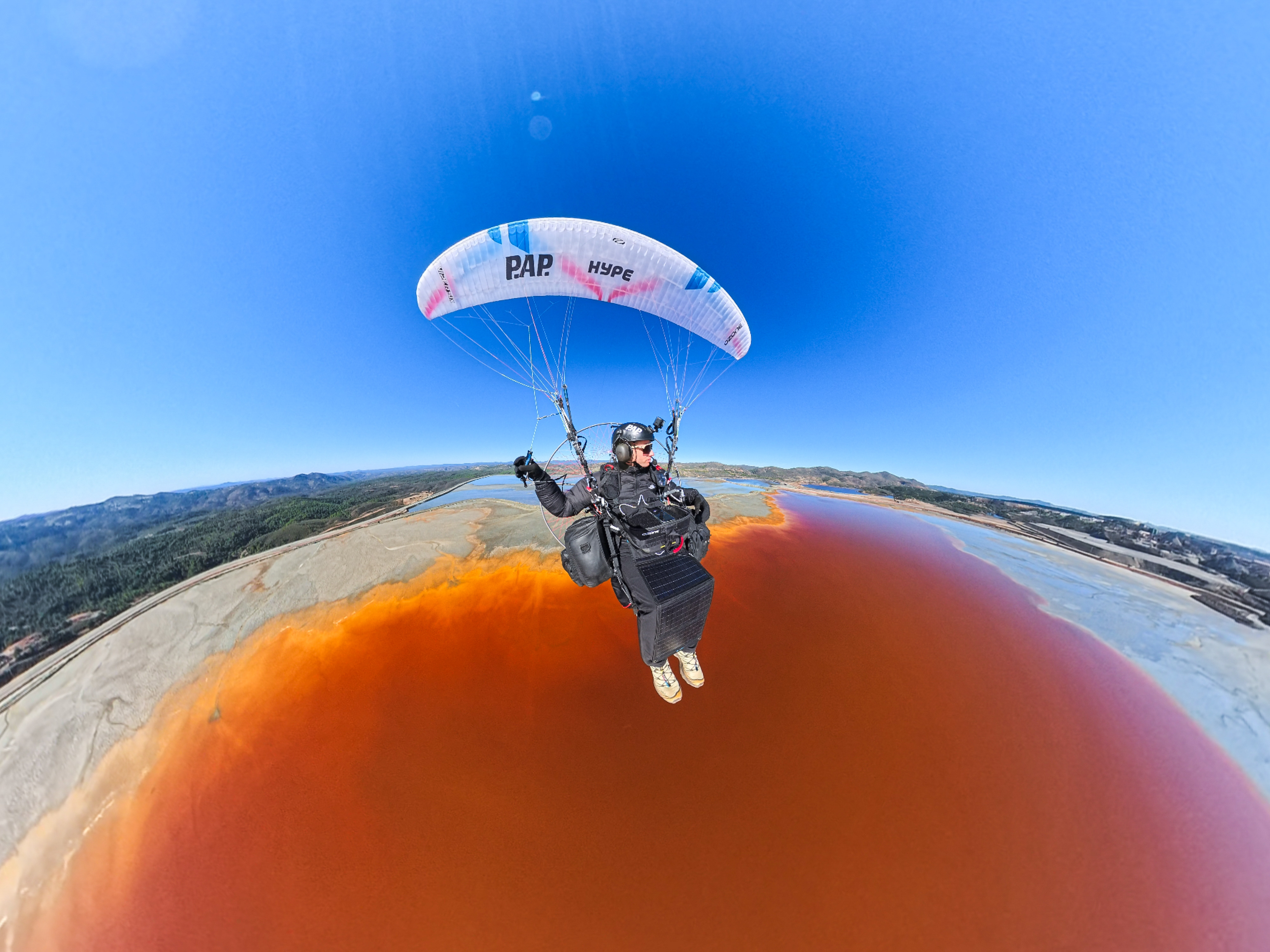
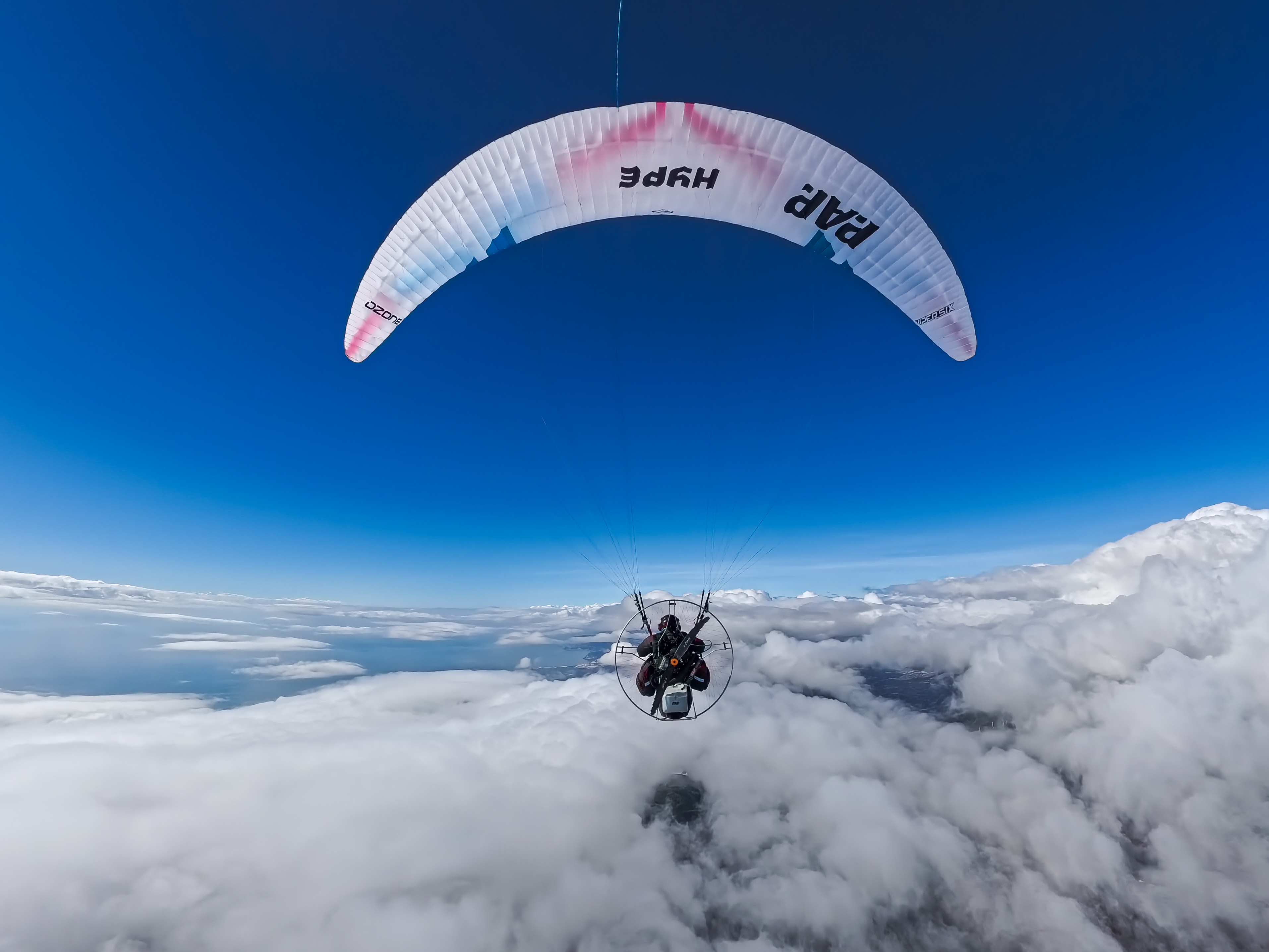
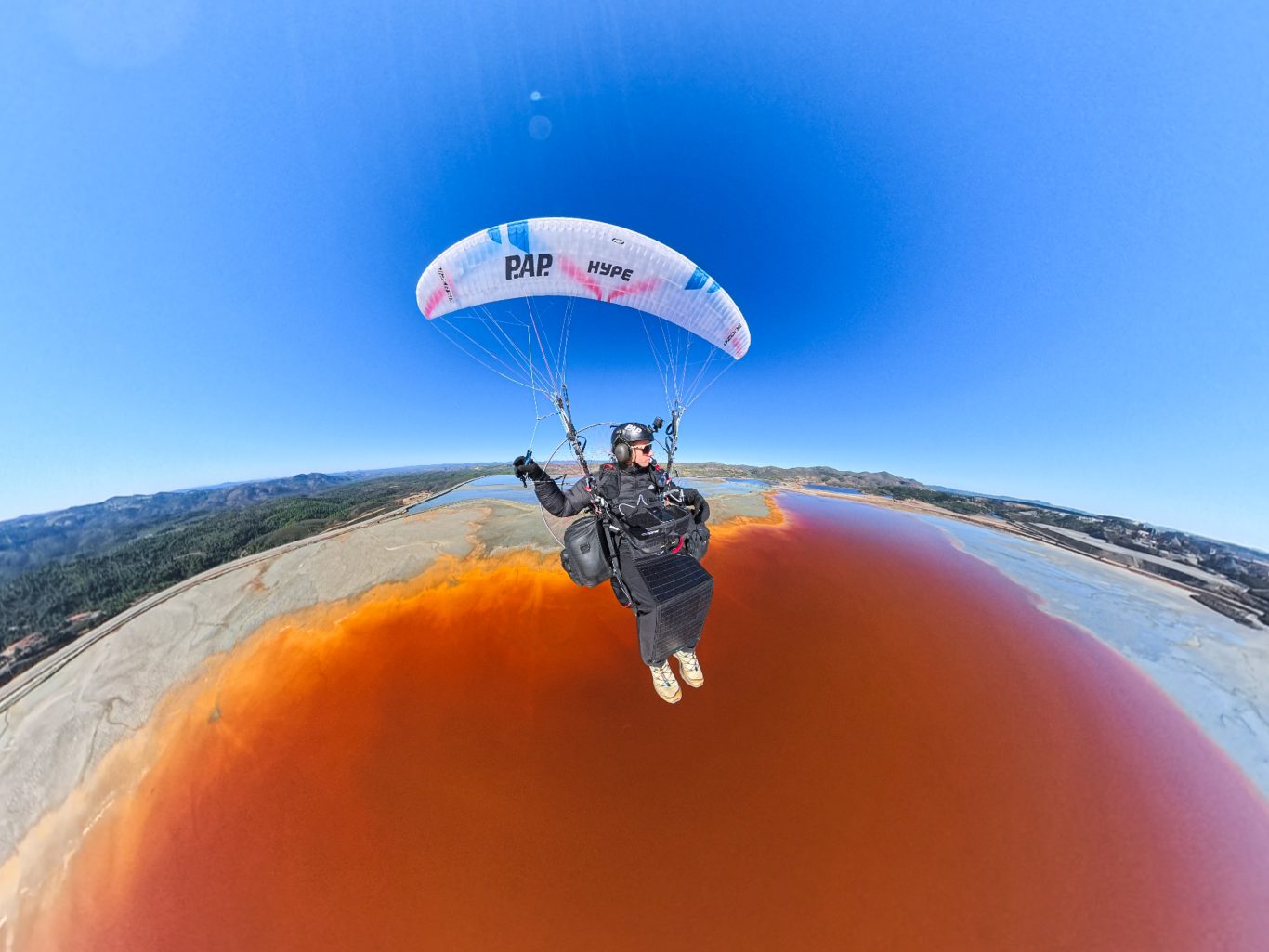
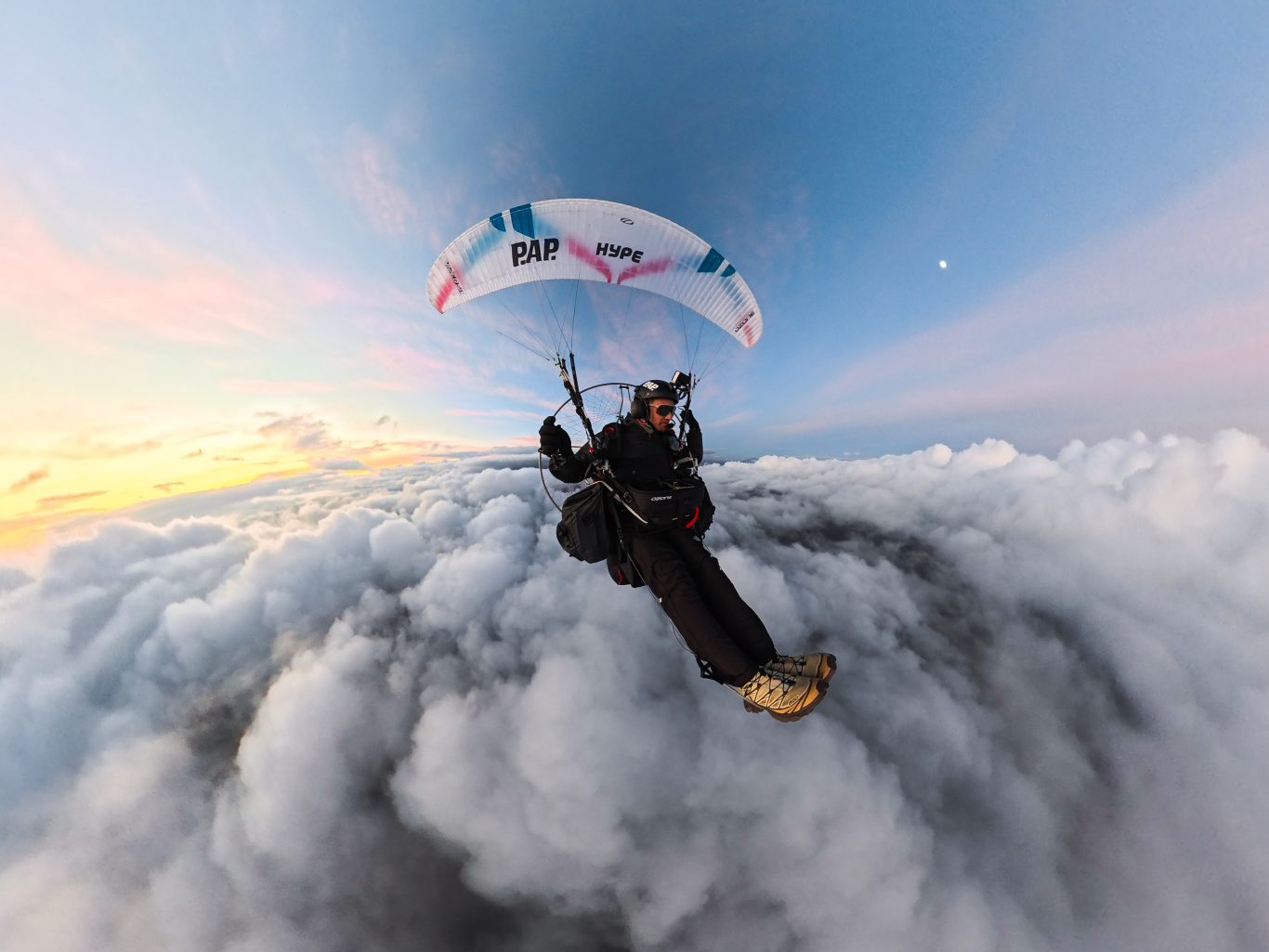
I flew over spectacular places such as the Río Tinto mines, the Gorafe and Tabernas deserts, and many unforgettable moments above the clouds at around 2,000 meters. Flying long distances really shows how diverse the landscapes are.
What was the first thing you thought when you touched down in Estepona?
My first thought was how intense the adventure had been. Finishing the route at home made it even more special.
How did the Vittorazi Moster185 Plus engine perform as your travel companion?
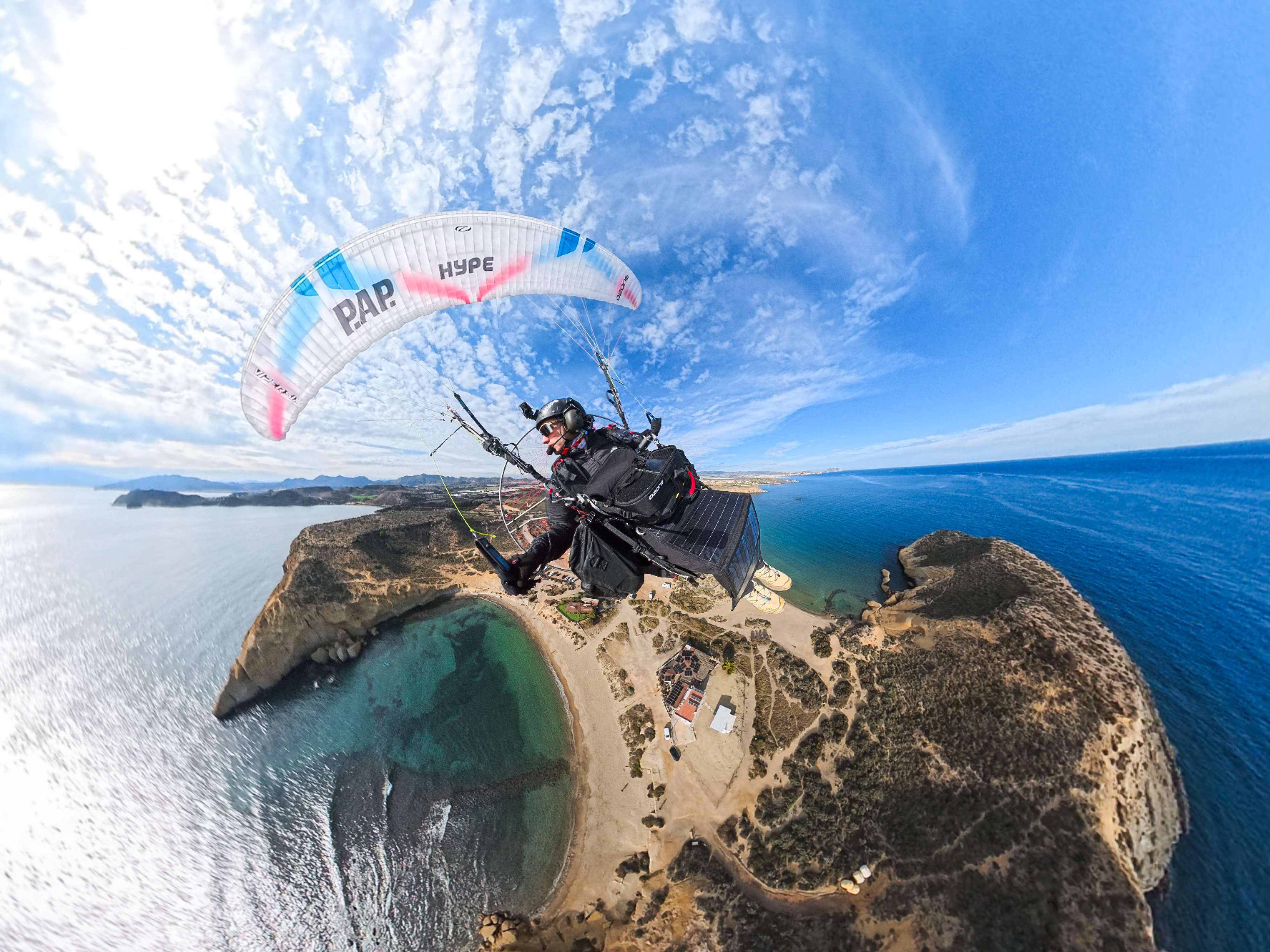
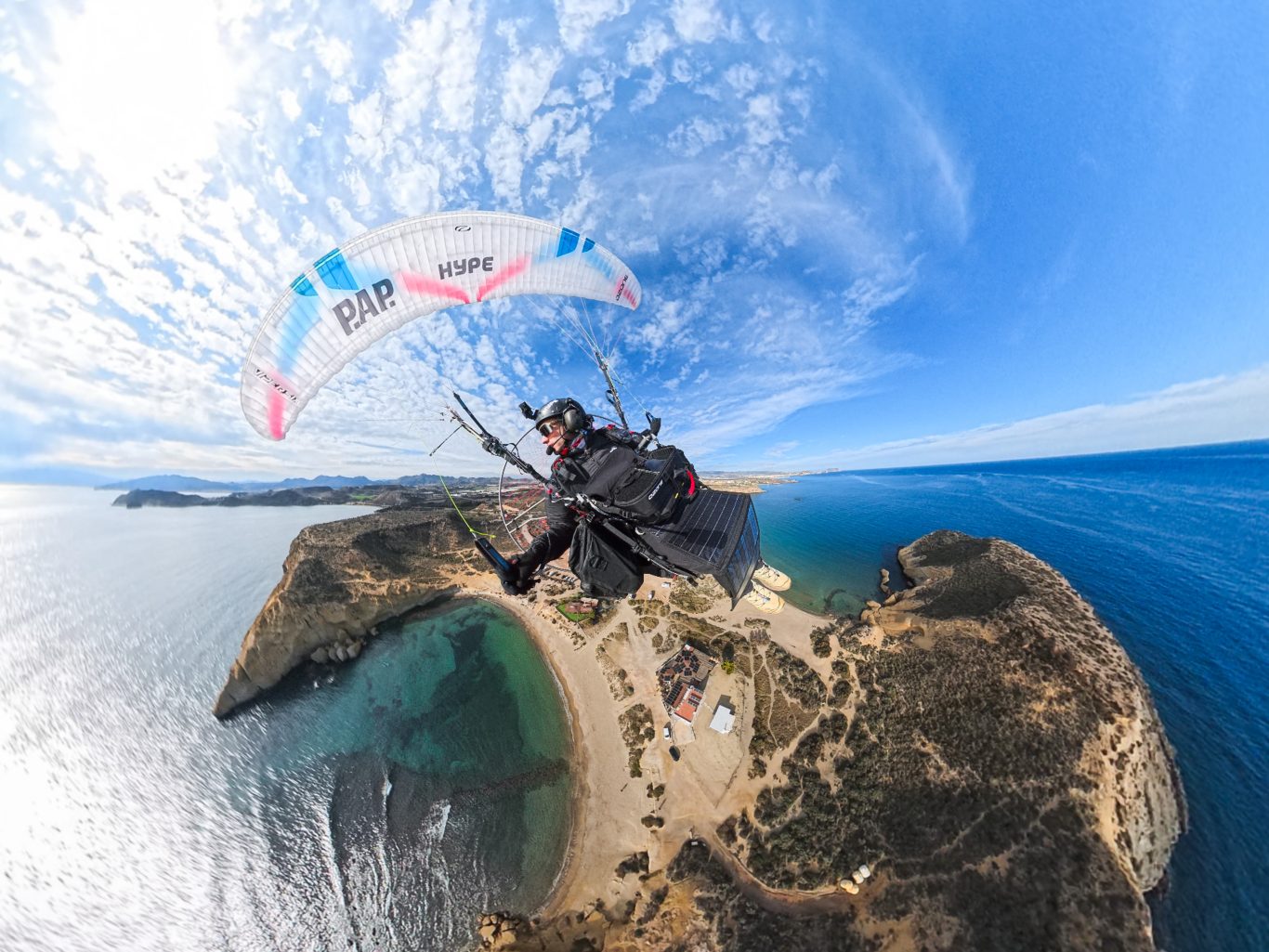
The Moster185 Plus performed flawlessly throughout the entire expedition. I flew in coastal areas with salt air, in very cold temperatures, and at higher altitudes, with long flight times day after day. Having a reliable and consistent engine is absolutely critical in this type of adventure, and it allowed me to focus fully on flying and decision making.
Where will your next adventure take you?
I have several projects in mind in different epic locations. The goal of World Arcs is to keep exploring new territories through long distance paramotor flights.
It is inspiring to think that what unites pilots, styles and experiences so different from one another, beyond a shared passion for flight, are Vittorazi engines. From backyard flights to world competitions, from relaxed weekends to expeditions in remote territories, from first lessons to adventures like Nico’s: Vittorazi Motors is there with reliability, comfort and power, ready to support every pilot’s biggest dreams.
Keep challenging yourself. Keep flying. And wherever your passion for flight takes you, Vittorazi will have the right solution for you.
Let’s rock the sky!